
Home » Hernia Surgery Recovery: Your Week-by-Week Guide to Healing
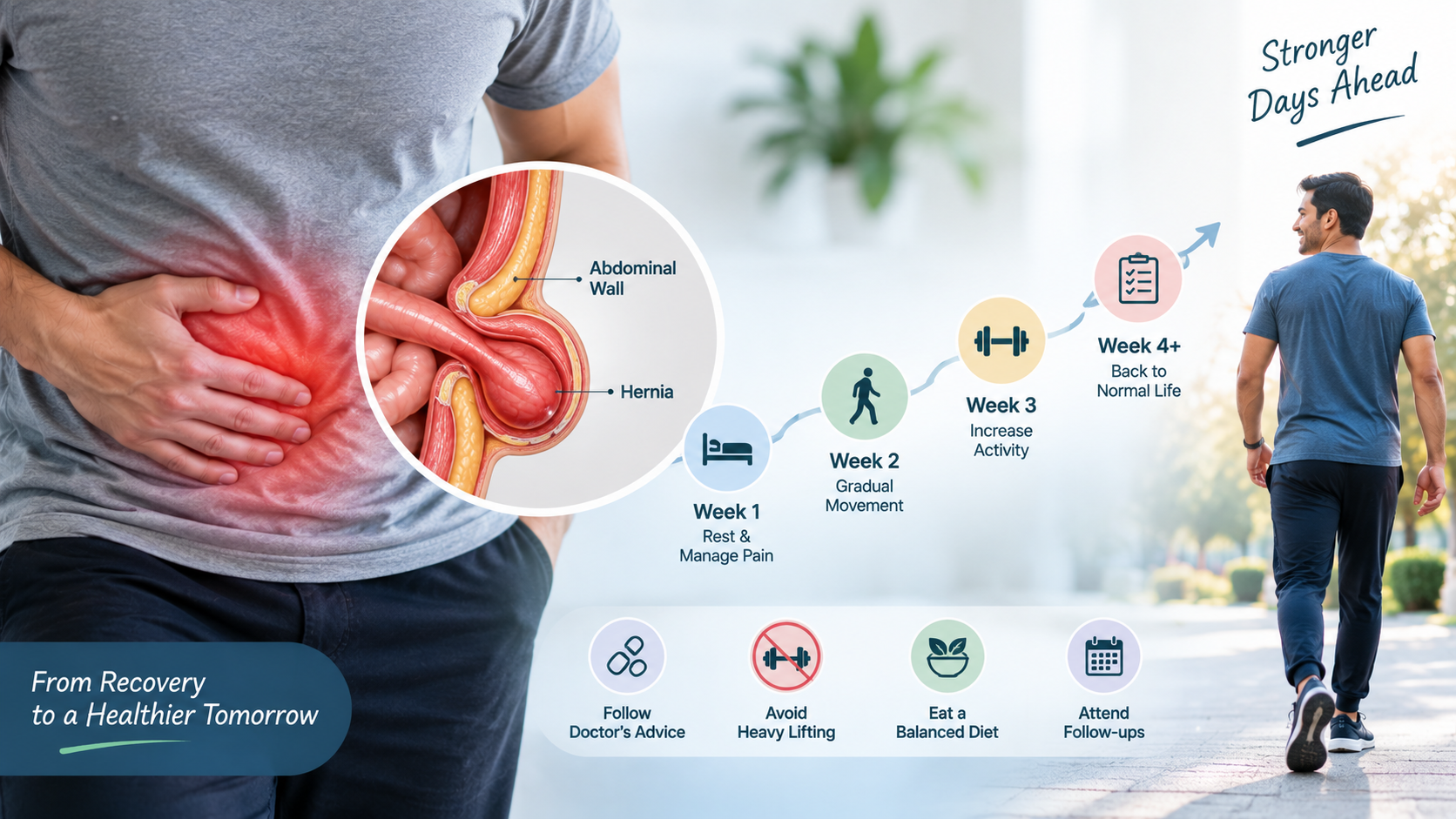
One of the most common questions after hernia surgery is simple: is what I am feeling right now common? Some soreness feels expected, but it is genuinely hard to tell whether you are healing on schedule or whether something demands intervention. This guide gives you a practical, week-by-week shape for recovery, and importantly, addresses a few everyday situations that general recovery guides tend to skip, like sitting cross-legged, using a traditional toilet, or getting back to temple visits and daily routines common here in Tirupati.
Before getting into the week-by-week picture, it matters which technique was used. Laparoscopic hernia repair, done via a few small incisions, generally allows a faster recovery as compared to open surgery, which involves one larger incision. If you are not sure which technique your surgery used, this is worth asking, since it changes the expectations.
| Recovery Milestone | Laparoscopic Repair | Open Repair |
|---|---|---|
| Walking unaided | Same day or next day | Same day, slower pace |
| Return to desk work | 3 to 7 days | 1 to 2 weeks |
| Driving | 1 to 2 weeks | 2 to 3 weeks |
| Light lifting resumes | 2 to 3 weeks | 3 to 4 weeks |
| Full activity, heavy lifting | 4 to 6 weeks | 6 to 8 weeks |
The first week is about healing, not pushing through. Some soreness, swelling, and a pulling sensation near the incision are common. Short walks around the house are genuinely helpful for circulation and are encouraged, but anything more strenuous should be delayed.
By the second week, most patients notice a real spike in energy and comfort. Many people with
desk-based work return during this period, though physically demanding jobs typically need more time. Driving is usually reasonable once you stop strong pain medication and can react quickly and comfortably, generally within one to two weeks.
This is also the stage where everyday questions come up that generic recovery guides do not address. Sitting cross-legged on the floor, common during prayer or meals in many households, puts gentle pressure on the abdominal area and is usually best avoided until at least the third week, and should be resumed only when your surgeon confirms it is fine for your specific repair. Similarly, if you use a traditional squat-style toilet, this involves more core engagement than a Western-style one and is worth discussing with your surgeon if it is your only option at home during early recovery.
Climbing stairs is generally fine by this stage for most patients but at a comfortable pace. Lifting limits are the area where people most often push too soon. Even when you feel mostly normal, the internal repair, especially if mesh was used, is still maturing and gaining strength during this period. Most surgeons advise avoiding heavy lifting until at least the six-week mark, sometimes longer for larger or more complex repairs.
Many hernia repairs today use a synthetic mesh to reinforce the weakened area, which significantly reduces the chance of the hernia coming back. It is normal to feel mild sensation of the mesh area for some weeks, sometimes months, particularly with position changes or pressure. This typically settles over time as the tissue heals around it.
Someone undergoes laparoscopic inguinal hernia repair and returns to their desk job within five days, feeling largely comfortable. Encouraged by this, they attempt to lift a moderately heavy box during week three, out of habit, and notice a pulling discomfort at the incision site that lasts the rest of the day.
Nothing serious happens, but it is a useful reminder that feeling fine is not the same as being fully healed internally. Following the six-week guidance for heavier lifting, rather than going by how good they felt, would have completely avoided that scare.
Any of these warrant contacting your surgical team promptly rather than waiting for your next scheduled follow-up.
Gentle, easily digestible food during the first few days helps avoid straining during bowel movements, which is genuinely worth avoiding right after hernia repair. Adequate fibre and fluids in the days following surgery reduce the risk of constipation-related straining, which can put unwanted pressure on a healing repair.
If you would like a personalised laser hair removal quote based on your specific skin and hair type, book a consultation with our dermatology team.
Light walking is encouraged from day one, but structured exercise, including yoga postures that engage the core, should wait until your surgeon confirms you are ready, typically from around the fourth to sixth week depending on the type of repair and how your recovery is progressing.
Attending your scheduled follow-up visits allows your surgeon to confirm the repair is healing as expected and to give you personalized guidance on lifting and activity, rather than relying on generic timelines alone. If you have not yet had your hernia evaluated or repaired, understanding the procedure itself is a useful first step, covered in detail on our hernia repair surgery page.
Recovery guidance works best when it accounts for your specific repair type, technique, and daily life, not a generic calendar. Yutika Hospital’s surgical team gives personalized recovery instructions after every hernia procedure, and remains available for questions during the weeks that follow. If you are still deciding between treatment options, our laparoscopic vs open surgery comparison explains the technique differences in more depth.
Hernia surgery recovery is a gradual, staged process, and knowing what to expect at each stage makes the waiting far less stressful. The details that matter most, your specific repair technique, your surgeon’s individual guidance, and paying attention to warning signs, matter more than any generic calendar, including this one.
If you have questions about your specific recovery or are still considering hernia surgery, book a consultation with our surgical team.
This article is intended for educational and informational purposes only and should not be considered medical advice, diagnosis, or treatment. Every individual’s health condition is unique. Always consult a qualified healthcare professional for personalized medical guidance. Do not ignore or delay seeking professional medical advice based on information provided in this article. If you are experiencing a medical emergency, seek immediate medical attention or contact your local emergency services.

Yutika Hospital is a trusted multi-speciality hospital in Tirupati offering advanced general surgery and dermatology treatments. We focus on accurate diagnosis, effective treatment, and personalized patient care.
Need more help?
Email support
2-120A, Rd Number 2, M.K. Naidu Colony, Lingeswar Nagar, Bairagi patteda, Tirupati, Andhra Pradesh 517501
Best Hospital in Tirupati for General Surgery & Dermatology Treatments
© 2026 Yutika Hospital, Tirupati. All Rights Reserved.