
Home » Gallbladder Stone Symptoms: When Diet Helps and When Surgery Is Needed
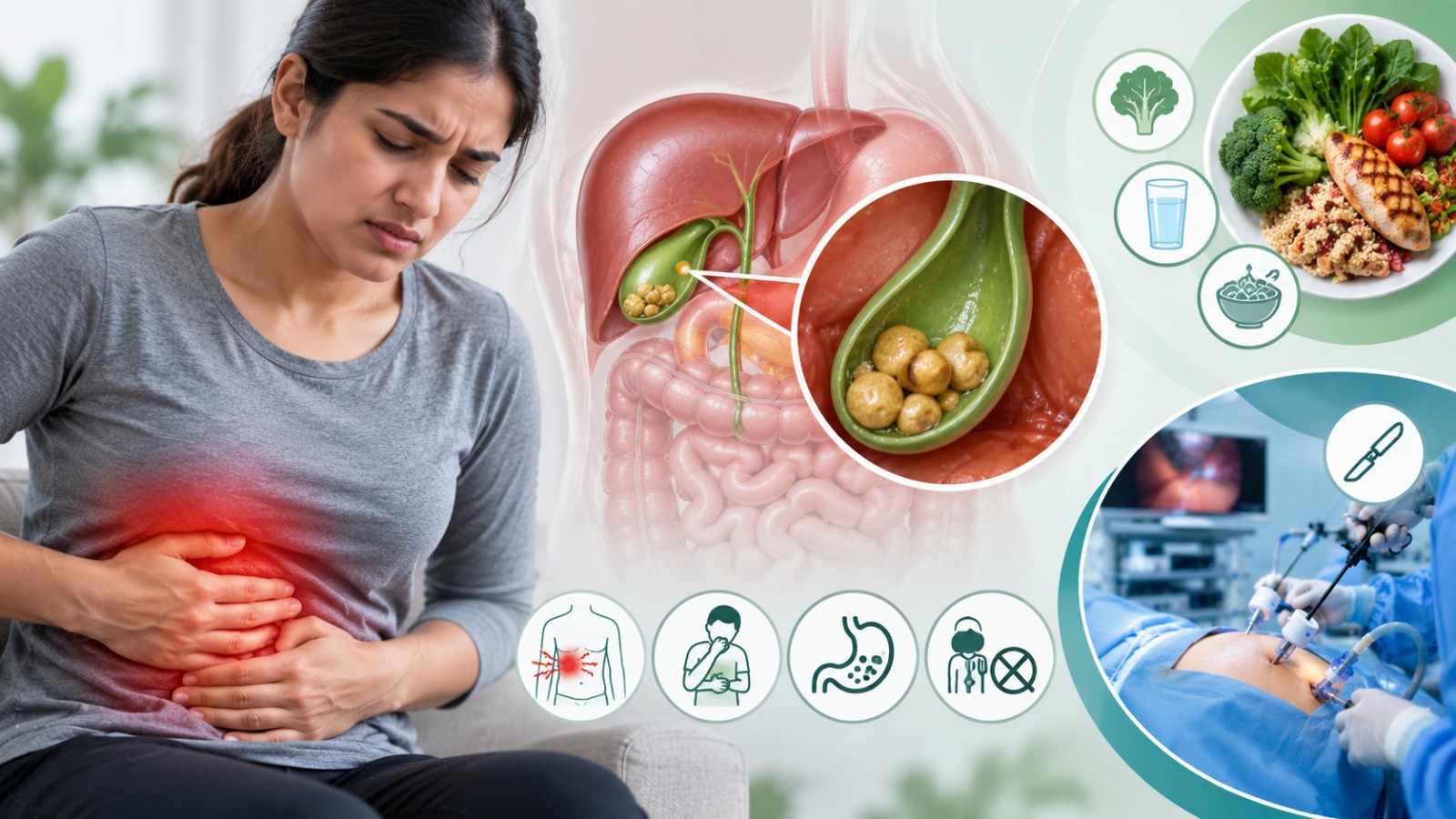
Gallstones are common, and many people carry them for years without knowing, until a sudden episode of pain sends them searching for answers. Understanding the difference between silent gallstones, a manageable diet issue, and a genuine surgical emergency can help you know exactly when to act.
Gallstones develop when substances in bile, mainly cholesterol and bilirubin, harden into solid deposits inside the gallbladder. They can range from as small as a grain of sand to as large as a golf ball, and a person can have just one stone or several dozen at once.
Many people have gallstones that cause no symptoms at all, often discovered incidentally during an ultrasound done for an unrelated reason. These silent stones may never cause a problem, though a portion of people with silent stones eventually do develop symptoms. Symptomatic gallstones are a different situation entirely, where the stones actively cause pain and complications that demand medical attention.
A gallbladder attack happens when a stone constricts the flow of bile, causing the gallbladder to contract against the blockage. This is excruciating and many patients describe it as one of the most intense pains they have ever experienced.
Fatty or fried foods are the most common trigger, since fat stimulates the gallbladder to contract and release bile, which can push a stone into the bile duct opening and cause a blockage. Large meals, and sometimes eating after a period of fasting, can also trigger episodes.

An abdominal ultrasound is the most common and reliable way to detect gallstones, and it is a painless, non-invasive test. In some cases, additional blood tests are done to check for infection or inflammation if there is a doubt of complication.
For genuinely silent gallstones with no symptoms, many doctors recommend monitoring rather than immediate surgery. Medications to dissolve certain types of stones do exist, but they are slow and not effective for all stone types. Stones often recur after stopping medication. For this reason, medication is not considered an ideal recourse over a reliable long-term solution for symptomatic stones.
If you have gallstones without significant symptoms, or are managing mild symptoms while deciding on treatment, diet changes can genuinely help to reduce the frequency and severity of attacks.
Diet management helps to reduce symptoms for some patients, but it does not dissolve existing stones or guarantee the stoppage of attacks. It is best thought of as symptom management rather than a cure.
Someone experiences an intense episode of upper abdominal pain after a heavy, fried dinner and assumes it was simply food poisoning. Weeks later, a similar episode happens after another fatty meal, prompting an ultrasound that reveals multiple gallstones. After a period of trying to manage symptoms through diet alone, the attacks continue at a similar frequency. This pattern, repeated attacks despite diet changes, is one of the clearest signals that the gallbladder itself needs to be treated via surgery.
When surgery is needed, laparoscopic removal of the gallbladder, known as a cholecystectomy, is the standard approach for most patients. It is performed through a few small incisions rather than one large cut as it typically allows a same-day or next-day discharge and a faster return to normal activity compared to open surgery. You can read a detailed comparison between laparoscopic and open techniques on our laparoscopic vs open surgery blog.
Book a confidential consultation with the Dermatology team at Yutika Hospital for an accurate diagnosis and a customized treatment plan.
Yes, completely normally. The gallbladder stores bile produced by the liver, but the liver continues producing bile even after the gallbladder is removed, and it flows directly into the digestive system instead. Most people notice little to no difference in digestion after recovery, though some experience temporary changes in bowel habits that generally stabilise within a few weeks to months.
Gallstone treatment is not one-size-fits-all, and the right approach depends on your specific symptoms, stone characteristics, and overall health. Yutika Hospital’s general surgery team reviews your ultrasound findings and symptom history to recommend the most appropriate redressal, whether that is monitoring, diet management, or laparoscopic surgery. You can learn more on our gallbladder stone removal page.
Not every gallstone needs immediate surgery, but symptomatic gallstones causing repeated attacks rarely improve with diet alone. Understanding your specific situation, through an ultrasound and a proper consultation, is the safest way to know whether monitoring, dietary cautions, or surgical procedure is the right next step for you.
If you have had a gallbladder attack or an ultrasound showing gallstones, book a consultation with our surgical team to discuss your options.
This article is intended for educational and informational purposes only and should not be considered medical advice, diagnosis, or treatment. Every individual’s health condition is unique. Always consult a qualified healthcare professional for personalized medical guidance. Do not ignore or delay seeking professional medical advice based on information provided in this article. If you are experiencing a medical emergency, seek immediate medical attention or contact your local emergency services.

Yutika Hospital is a trusted multi-speciality hospital in Tirupati offering advanced general surgery and dermatology treatments. We focus on accurate diagnosis, effective treatment, and personalized patient care.
Need more help?
Email support
2-120A, Rd Number 2, M.K. Naidu Colony, Lingeswar Nagar, Bairagi patteda, Tirupati, Andhra Pradesh 517501
Best Hospital in Tirupati for General Surgery & Dermatology Treatments
© 2026 Yutika Hospital, Tirupati. All Rights Reserved.