
Home » Diet After Gallbladder Surgery: What to Eat Week by Week
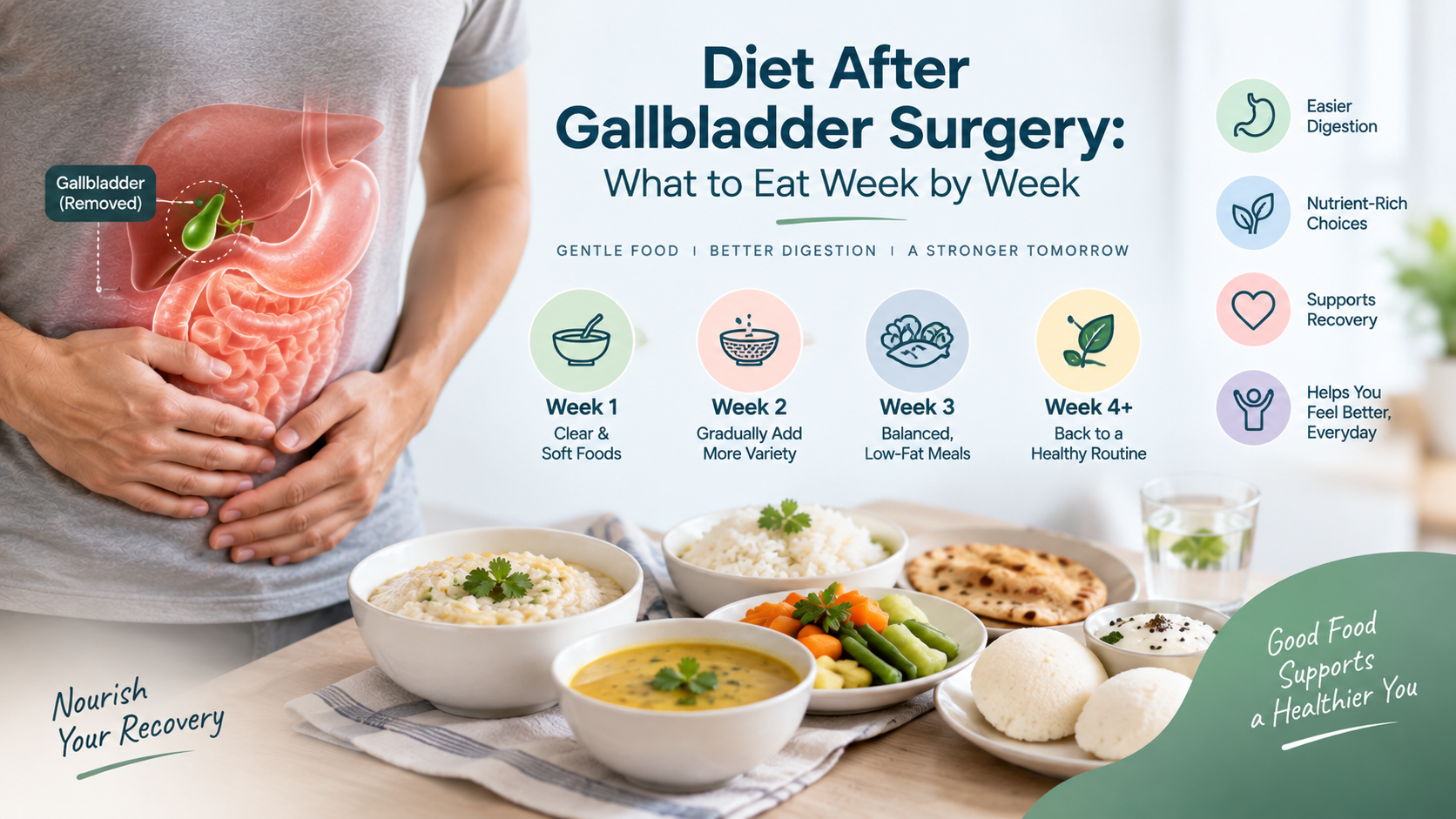
Once the surgery itself is behind you, the next question most patients have is far more everyday: what can I actually eat now? Digestion does change somewhat after gallbladder removal, and a little planning around your typical Indian meals, rather than following a generic Western diet chart, makes the first few weeks noticeably more comfortable.
The gallbladder’s job is to store bile produced by the liver and release it in a concentrated burst when you eat fatty food. Without it, the liver still produces bile continuously, but it flows more steadily rather than in a concentrated release. This means your digestive system needs a short adjustment period, particularly with fattier meals, which is why diet in the first few weeks matters more than it will later on.
The goal in these first few days is gentle, low-fat nourishment rather than a full, heavy meal.
Avoid fried items, heavy use of oil or ghee, and rich gravies during this first week, since your system is still adjusting to bile flowing more continuously rather than in a concentrated release.
By the second week, most patients can begin slowly reintroducing a wider variety of foods, watching how their body responds to each addition rather than changing everything at once.
While most patients return to a largely normal diet within a month, certain foods are worth continuing to limit, since they are the most likely to cause discomfort even well after the initial recovery period.
Some patients experience loose stools or bloating for the first few weeks, sometimes longer, as the body adjusts to the altered bile flow. This is a well-recognized, generally temporary effect. Smaller, more frequent meals rather than three large ones, along with gradually increasing fibre intake, often help manage this adjustment period.
Someone eager to get back to normal eats a typical festive meal, rich with ghee and fried items, within the first week after surgery, and experiences uncomfortable bloating and loose stools that evening.
Rather than a sign that something went wrong with the surgery, this is a fairly predictable response to reintroducing rich food before the digestive system has adjusted. Waiting until the second or third week, and reintroducing richer foods gradually rather than all at once, generally avoids this kind of discomfort.
| Meal | Suggestion |
|---|---|
| Breakfast | Soft idli with mild sambar, or vegetable upma with minimal oil |
| Mid-morning | A banana or small bowl of papaya |
| Lunch | Rice, plain dal, one lightly cooked vegetable, small portion of curd |
| Evening | Buttermilk or light herbal tea with a small snack |
| Dinner | Soft roti or rice with a mild, low-oil vegetable curry |
Most patients tolerate tea and coffee reasonably well after the first few days, though very strong or excessive caffeine intake on an empty stomach can sometimes cause discomfort during the initial adjustment period. Moderation during the first couple of weeks is a reasonable approach.
Some patients notice mild weight fluctuation in the weeks following gallbladder removal, related to temporary dietary adjustments and altered digestion, rather than a permanent metabolic change. Weight generally stabilizes as diet normalizes over the following weeks to months.
For most patients, no. The vast majority return to eating a largely normal diet, including occasional richer or fried foods, within a month or so. A smaller number of patients find that certain very fatty or heavy foods continue to cause mild discomfort long-term and choose to limit them by preference rather than strict necessity. If you experienced significant gallstone symptoms before surgery, revisiting what those symptoms felt like can help you recognize the difference between normal post-surgical adjustment and something worth mentioning to your surgeon.
If you would like a personalised laser hair removal quote based on your specific skin and hair type, book a consultation with our dermatology team.
Recovering well after gallbladder surgery includes practical guidance on eating comfortably, not just the procedure itself. Yutika Hospital’s surgical team provides diet guidance tailored to typical Indian meals at your follow-up visit, so you are not left guessing with generic advice. Learn more about the procedure itself on our gallbladder stone removal page.
Eating well after gallbladder surgery is mostly about pacing rather than permanent restriction. Starting light, reintroducing your normal Indian meals gradually, and paying attention to how your body responds gets most people back to comfortable, familiar eating within a matter of weeks.
If you have questions about your specific recovery diet, reach out to our surgical team for guidance suited to your situation.
This article is intended for educational and informational purposes only and should not be considered medical advice, diagnosis, or treatment. Every individual’s health condition is unique. Always consult a qualified healthcare professional for personalized medical guidance. Do not ignore or delay seeking professional medical advice based on information provided in this article. If you are experiencing a medical emergency, seek immediate medical attention or contact your local emergency services.

Yutika Hospital is a trusted multi-speciality hospital in Tirupati offering advanced general surgery and dermatology treatments. We focus on accurate diagnosis, effective treatment, and personalized patient care.
Need more help?
Email support
2-120A, Rd Number 2, M.K. Naidu Colony, Lingeswar Nagar, Bairagi patteda, Tirupati, Andhra Pradesh 517501
Best Hospital in Tirupati for General Surgery & Dermatology Treatments
© 2026 Yutika Hospital, Tirupati. All Rights Reserved.