
Home » Vitiligo (White Patches on Skin): Myths, Facts and Treatment Options
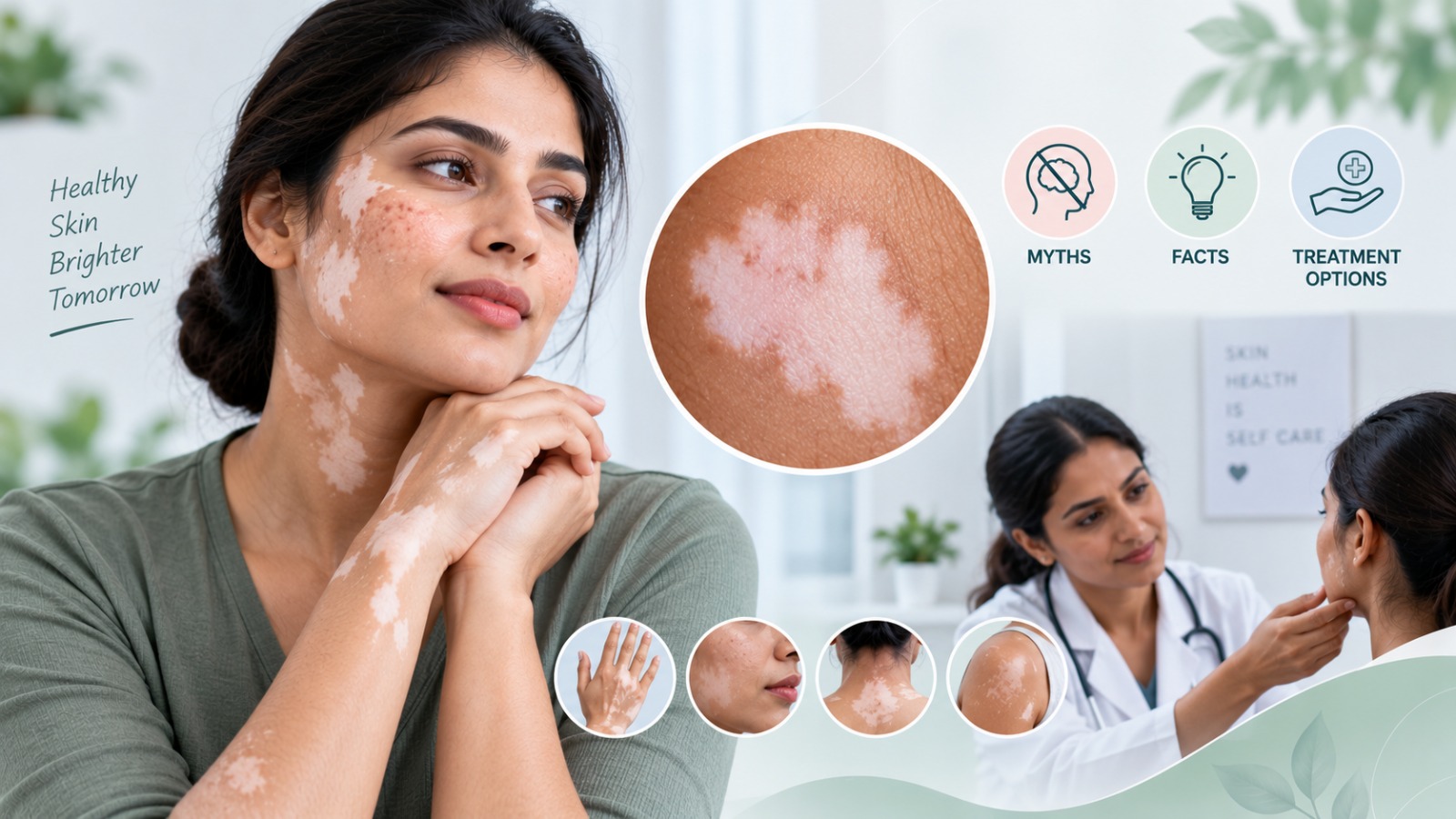
Discovering a white patch on your skin can be unsettling, and in India particularly, it often comes wrapped in a level of stigma and misinformation that makes an already difficult moment harder. Vitiligo is a genuine and established medical condition rather than a punishment. It is not contagious, and most importantly, it is treatable. Understanding what it actually is, going away from the surrounding myths, is the first step toward managing it.
Vitiligo is a condition where the skin loses its pigment in patches. This happens due to the loss of melanocytes- the cells responsible for producing skin color. It is an autoimmune condition, meaning the body’s own immune system mistakenly targets and destroys these pigment-producing cells in specific areas.
Vitiligo is not contagious. It cannot spread from person to person through touch, sharing food, or any form of contact. It is also not related to leprosy, despite an unfortunate and outdated association that still persists in some communities. And it is not caused by anything the person did, ate, or any moral failing, a belief that unfortunately still causes real social difficulty arising from stigma for many patients.
It is also worth distinguishing vitiligo from other pigmentation-related skin concerns. Where vitiligo involves a loss of pigment, conditions like melasma involve an excess of pigment in specific areas, and the two need very different treatment approaches. Our melasma and facial pigmentation blog covers that condition in more detail.
The exact trigger varies by individual, but vitiligo is understood to be an autoimmune process, often with a genetic component that makes some people more susceptible. Factors like significant stress, skin injury, or sunburn can sometimes trigger the onset or spread of patches in people who are already predisposed to the condition, though vitiligo is not caused exclusively by these factors alone.

|
Myth |
Fact |
|
Vitiligo is contagious |
Vitiligo cannot spread through touch, contact, or any form of proximity to another person |
|
Vitiligo is caused by eating certain food combinations |
There is no established link between specific food combinations and the development of vitiligo |
|
Vitiligo means poor hygiene or impurity |
Vitiligo is an autoimmune condition entirely unrelated to hygiene or cleanliness |
|
Vitiligo cannot be treated |
While a complete permanent cure is not always achievable, many treatment options can meaningfully restore pigment or stop progression, especially when started early |
|
Vitiligo always spreads to cover the whole body |
Spread varies significantly by individual and type. Many cases remain limited to a few patches |
Vitiligo tends to respond better to treatment when addressed early, while patches are smaller and the affected area is more limited. Waiting for years before seeking treatment does not improve outcomes, and in some cases, patches can spread further during that time. This is one of the most important reasons to consult a dermatologist as soon as a white patch is noticed, rather than waiting to see what happens.
Certain topical medications can help to stimulate repigmentation in some patients, particularly for smaller, more recent patches, and are often the first point for treatment.
A treatment using controlled, medical-grade ultraviolet light exposure to stimulate melanocyte activity and encourage repigmentation, typically done over multiple sessions and an extended period under professional supervision.
For stable patches that are unresponsive to other treatments, certain surgical techniques can transplant pigment-producing cells from unaffected skin to the affected area. This approach is generally reserved for specific cases rather than being a first-line treatment.
A young adult notices a small white patch on their hand, influenced by family concern rooted in archaic beliefs and stigma, delays seeking medical advice for over a year, hoping it would simply go away on its own. By the time they consult a dermatologist, the patch has grown somewhat larger. Starting treatment at this stage still shows meaningful improvement, but a dermatologist notes that early treatment responds most effectively. This is a common and understandable pattern, where social stigma, more than the condition itself delays seeking redressal.
Beyond the medical treatment itself, many patients benefit from connecting with others who understand the condition, and from working through any social or emotional impact with support, since the psychological aspect of a visible skin condition is a real part of managing it well. A good dermatologist addresses both the medical and emotional sides of a vitiligo diagnosis.
Book a confidential consultation with the Dermatology team at Yutika Hospital for an accurate diagnosis and a customized treatment plan.
This requires a careful balance. Unprotected sun exposure on vitiligo patches can increase the risk of sunburn, since the patches lack the protective pigment that the rest of the unaffected skin has. At the same time, certain forms of controlled, medical light exposure are actually used as treatment. This is exactly why sun care advice for vitiligo should come from a dermatologist rather than other non professional sources.
Vitiligo deserves the same respectful, evidence-based approach as any other medical condition without the stigma that unfortunately surrounds it in many communities, to this day. Yutika Hospital’s dermatology team provides an accurate diagnosis and a treatment plan suited to your specific type and stage of vitiligo, with early consultation genuinely improving the range of options available. You can learn more on our vitiligo treatment page.
Vitiligo is a manageable medical condition, not something to hide out of fear or stigma. The myths surrounding it cause more harm than the condition itself, often delaying treatment at the exact stage when it tends to work best. An early, prompt consultation is the most valuable step anyone noticing a new white patch can take.
If you have noticed a white patch on your skin, book a consultation with our dermatology team for an accurate diagnosis and treatment plan.
This article is intended for educational and informational purposes only and should not be considered medical advice, diagnosis, or treatment. Every individual’s health condition is unique. Always consult a qualified healthcare professional for personalized medical guidance. Do not ignore or delay seeking professional medical advice based on information provided in this article. If you are experiencing a medical emergency, seek immediate medical attention or contact your local emergency services.

Yutika Hospital is a trusted multi-speciality hospital in Tirupati offering advanced general surgery and dermatology treatments. We focus on accurate diagnosis, effective treatment, and personalized patient care.
Need more help?
Email support
2-120A, Rd Number 2, M.K. Naidu Colony, Lingeswar Nagar, Bairagi patteda, Tirupati, Andhra Pradesh 517501
Best Hospital in Tirupati for General Surgery & Dermatology Treatments
© 2026 Yutika Hospital, Tirupati. All Rights Reserved.