
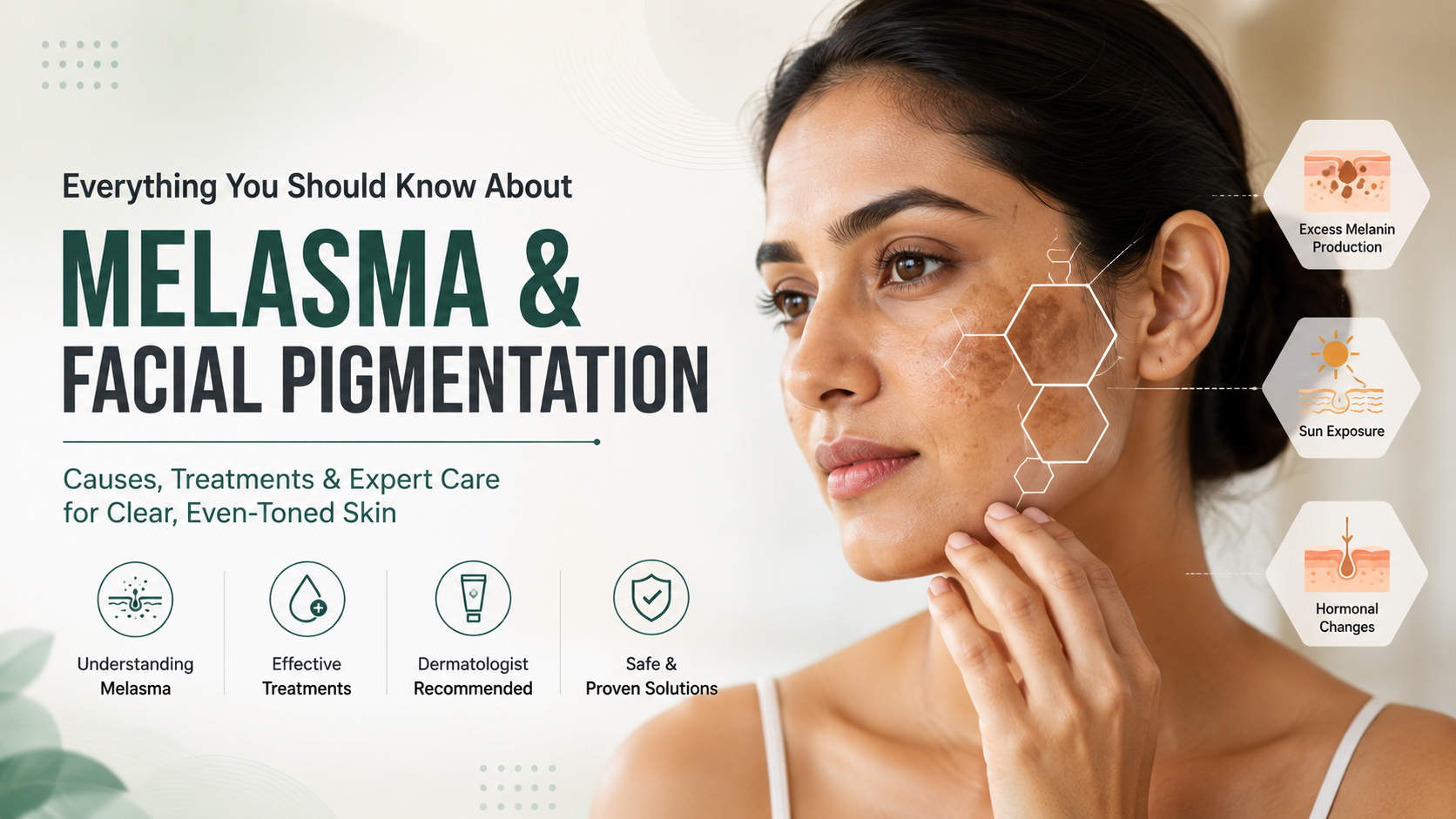
Melasma and Facial Pigmentation: Why It Happens and What Actually Removes It
Dark, uneven patches appearing on the cheeks, forehead, or upper lip are frustrating, especially when they seem to get darker no matter what product you try. This is a very common concern, and in many cases the condition is melasma, a specific type of facial pigmentation with its own particular triggers and its own particular treatment approach, one that most over the counter creams are simply not designed to address.
What Is Melasma?
Melasma is a common skin condition that causes brown or greyish brown patches, usually appearing symmetrically on both sides of the face, most often on the cheeks, forehead, nose bridge, and upper lip. It occurs when pigment producing cells in the skin become overactive in specific areas, producing excess melanin.
Melasma vs Other Types of Pigmentation
Not all facial dark spots are melasma. Sun spots, post acne marks, and general uneven skin tone can all look somewhat similar but have different causes and often respond to different treatments.
- Melasma typically appears as larger, more symmetrical patches, often on both cheeks or across the forehead
- Sun spots tend to be smaller, more scattered, and directly linked to sun exposed areas
- Post acne marks appear specifically where previous breakouts occurred, rather than in the broader symmetrical pattern typical of melasma
This distinction matters because treatment that works well for one type of pigmentation may be far less effective, or even counterproductive, for another.
What Triggers Melasma?
Sun Exposure
Ultraviolet light is one of the strongest triggers for melasma, and even brief, regular sun exposure without adequate protection can worsen existing patches or trigger new ones.
Hormonal Changes
Melasma is strongly linked to hormonal fluctuations, which is why it is so common during pregnancy, sometimes called the mask of pregnancy, and with hormonal contraceptive use.
Heat
Beyond sun exposure specifically, general heat exposure, including from cooking over stoves or spending time in hot, humid conditions, can also contribute to melasma in some individuals.
Genetics
A family history of melasma increases the likelihood of developing it, suggesting a genetic component alongside the environmental and hormonal triggers.
Why Fairness Creams Do Not Fix Melasma
Many over the counter fairness or brightening creams are formulated for general skin tone improvement, not for the specific pigment producing activity involved in melasma. Using them consistently, particularly products with unregulated or unknown ingredients, sometimes leads to worsening pigmentation, irritation, or an uneven, patchy result rather than the improvement they promise.
A Word of Caution About Steroid Creams
Some fairness or skin lightening products sold without a prescription contain steroids, which can produce a temporary lightening effect that feels like progress. Used over weeks or months without medical supervision, however, steroid containing creams can cause thinning of the skin, visible blood vessels, worsening pigmentation once stopped, and other lasting skin changes. If you have been using an unlabelled or unprescribed cream for pigmentation, it is worth having a dermatologist review it.
Clinical Treatment Options
Topical Prescription Treatments
Dermatologist prescribed topical treatments, tailored to your specific skin type and the depth of pigmentation, are typically the starting point for melasma management.
Chemical Peels
Chemical peels formulated for pigmentation can help reduce the appearance of melasma by encouraging gentle, controlled skin renewal. This is different from a generic at home peel, since a dermatologist selects the specific peel strength and type based on your skin's actual needs. You can learn more about how this works on our chemical peeling treatment page.
Laser and Light Based Treatments
In select cases, laser or light based treatments may be used alongside topical treatment, though these require careful selection since certain lasers can worsen melasma in some skin types if not appropriately matched to the individual.
Sun Protection: The Non Negotiable Foundation
No treatment for melasma works well without consistent sun protection. Since ultraviolet exposure is one of the strongest triggers, daily sunscreen use, ideally reapplied through the day, along with practical steps like a hat or seeking shade during peak sun hours, forms the foundation that every other treatment builds on.
A Realistic Example
A Pattern We See Often
Consider someone who developed dark patches on both cheeks during pregnancy and has been using various fairness creams for over a year with minimal improvement, and occasional worsening after sun exposure. A dermatologist consultation identifies classic melasma, likely triggered by pregnancy related hormonal changes and made worse by inconsistent sun protection. A combination of a tailored topical treatment plan and consistent daily sunscreen use leads to gradual, visible improvement over a few months, something the fairness creams alone never achieved.
Setting Realistic Expectations
Melasma is a manageable condition, but it is important to understand it is not always a one time fix. It can fluctuate with hormonal changes, sun exposure, and season, meaning some patients need occasional maintenance treatment over time rather than a single permanent solution. A dermatologist can set realistic expectations based on your specific pattern and triggers.
When to See a Dermatologist
- Dark patches have persisted for more than a few months without improvement
- You have been using an unlabelled or unprescribed skin lightening product
- Pigmentation seems to be spreading or worsening despite home care
- You want an accurate diagnosis to confirm whether it is melasma or another type of pigmentation
Struggling with persistent pigmentation?
Book a confidential consultation with Yutika Hospital for an accurate diagnosis and a treatment plan suited to your skin.
Why Choose Yutika Hospital
Melasma responds best to treatment that is actually matched to its underlying triggers, not a generic fairness product. Yutika Hospital's dermatology team assesses your specific pigmentation pattern, likely triggers, and skin type before recommending a treatment plan, with realistic expectations set from the very first consultation.
Frequently Asked Questions
1. What removes melasma permanently?
Melasma can be significantly improved and controlled with appropriate treatment, though it can also recur with hormonal changes or sun exposure, so ongoing sun protection is typically part of long term management rather than a single permanent fix.
2. Why is my pigmentation getting darker?
This is often linked to continued sun exposure, hormonal changes, or the use of unsuitable or steroid containing skin lightening products, all of which can worsen melasma over time.
3. Do fairness creams remove pigmentation?
Most over the counter fairness creams are not formulated to address the specific pigment activity involved in melasma and may worsen pigmentation with prolonged use, particularly if they contain unregulated ingredients.
4. Which treatment is best for melasma?
This depends on your specific pigmentation pattern, skin type, and triggers, which is why a dermatologist evaluation is important before starting treatment rather than choosing a generic option.
5. Is melasma hormonal?
Hormonal changes are one of the most common triggers for melasma, which is why it frequently appears during pregnancy or with hormonal contraceptive use.
6. Will melasma return after treatment?
It can, particularly with continued sun exposure or hormonal changes, which is why consistent sun protection remains important even after visible improvement.
7. How many sessions are typically needed?
This varies by individual and the specific treatment approach used, and your dermatologist will outline an expected timeline based on your particular case.
8. Is melasma treatment safe during pregnancy?
Some treatments are not recommended during pregnancy due to the hormonal nature of melasma and potential fetal safety considerations. It is important to inform your dermatologist if you are pregnant or planning pregnancy before starting any treatment.
Conclusion
Melasma and facial pigmentation can feel discouraging when fairness creams and home remedies fail to make a real difference, but that is usually because they are not designed to address what is actually driving the pigmentation. Understanding your specific triggers, protecting your skin from sun exposure consistently, and following a treatment plan matched to your skin leads to far more realistic and lasting improvement.
If pigmentation has been a persistent concern, book a consultation with our dermatology team to get a treatment plan suited to your skin.