
Home » Tubectomy (Female Sterilisation): Procedure, Recovery and Common Myths
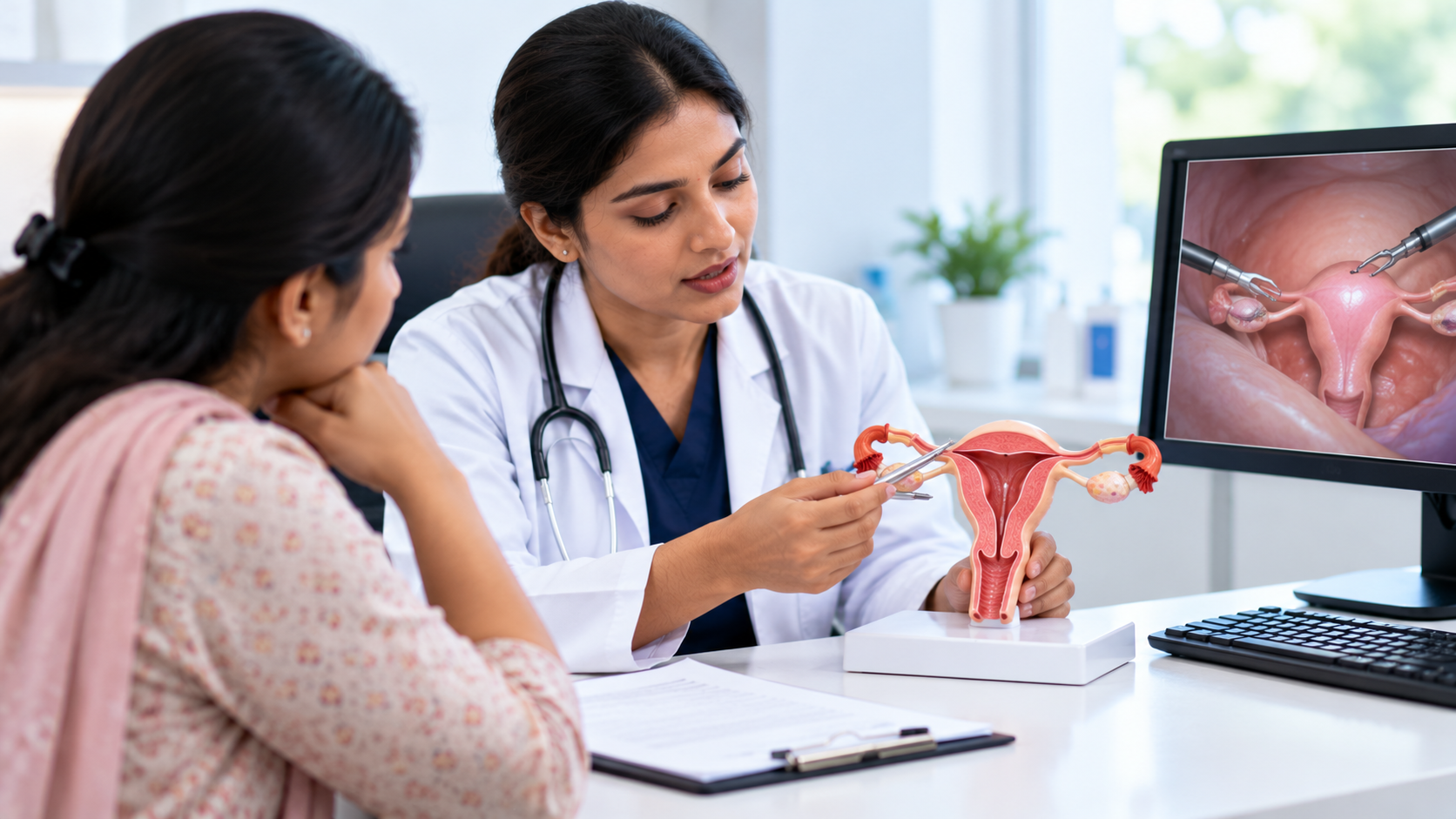
For many couples who feel their family is complete, tubectomy is the natural next conversation. It remains the most widely used method of family planning in India, according to the National Family Health Survey, yet it is also surrounded by myths: that it causes weight gain, stops periods, weakens the body or brings on early menopause. These worries lead some women to delay a decision, or to make one without the full picture.
This guide explains what tubectomy actually involves, how the laparoscopic procedure is done, what recovery looks like, and the facts behind the most common myths, so you can decide with confidence.
Tubectomy, also called tubal ligation or female sterilisation, is a permanent method of contraception. The surgeon blocks, cuts or seals both fallopian tubes, the narrow passages through which the egg travels from the ovary to the uterus. With the tubes closed, sperm cannot reach the egg, so pregnancy cannot occur.
Importantly, the ovaries and uterus are not removed or changed. The ovaries continue to release eggs and produce hormones as before. The released egg simply cannot pass through the tube, and it is naturally absorbed by the body.
Tubectomy may be a good choice if you:
It may not be the right choice if you are unsure, are making the decision during a stressful time such as a recent loss, or feel pressured. Because tubectomy is intended to be permanent, a good doctor will always take time to counsel you before scheduling it.
| Type | When It Is Done | Key Points |
|---|---|---|
| Laparoscopic tubectomy | As an "interval" procedure, usually six weeks or more after delivery, or at any time when not pregnant | Done through one or two small cuts with a camera; quick recovery; often same-day or next-day discharge |
| Minilaparotomy (mini-lap) | Within a few days after a normal delivery, or as an interval procedure | Done through a small incision of about 2 to 3 cm below the navel or above the pubic hairline |
| Tubectomy during caesarean section | At the time of a planned or emergency C-section | No extra incision needed; the tubes are closed after the baby is delivered |
Laparoscopic tubectomy is a form of keyhole surgery. Our guide comparing laparoscopic and open surgery explains why smaller incisions usually mean less pain and a faster return to normal life.
| Time After Surgery | What to Expect |
|---|---|
| First 24 to 48 hours | Mild abdominal pain, bloating and sometimes shoulder-tip pain from the gas; rest and prescribed pain relief help |
| Days 3 to 7 | Light household activities and short walks; keep the wound clean and dry |
| About 1 week | Most women return to desk work or light jobs; stitches are checked at follow-up |
| 2 to 3 weeks | Return to most normal activities; avoid heavy lifting until your doctor confirms |
Recovery after a mini-lap or a tubectomy done with a C-section may take a little longer, as it follows the healing of a larger incision or of the delivery itself. Most doctors advise resuming intercourse after about a week, or once you feel comfortable.
| Myth | Fact |
|---|---|
| Tubectomy causes weight gain | Tubectomy does not change your hormones. Weight changes after surgery are usually related to age, diet and activity |
| Periods stop or become irregular | The ovaries keep working, so periods continue. Some women notice changes simply because they have stopped hormonal pills |
| It brings on early menopause | There is no good evidence that tubectomy causes early menopause |
| Women become weak and cannot do hard work afterwards | After recovery, women return to full normal activity, including physical work |
| It reduces sexual desire | Tubectomy does not affect sexual desire or pleasure. Many couples feel more relaxed once pregnancy worries are gone |
| It can easily be reversed later | Reversal is a complex operation, is not always successful and is often expensive. Tubectomy should be treated as permanent |
Tubectomy is one of the most effective forms of contraception, but no method is 100 percent. Around 1 in 200 women may become pregnant at some point after the procedure, according to the UK’s National Health Service. When a pregnancy does occur after tubectomy, there is a higher chance that it is ectopic (outside the uterus), which is a medical emergency. If you miss a period, have a positive pregnancy test, or develop sudden lower abdominal pain or bleeding after tubectomy, see a doctor immediately.
| Method | Permanent? | Things to Consider |
|---|---|---|
| Tubectomy | Yes | Highly effective; a short surgical procedure under anaesthesia |
| Vasectomy (male sterilisation) | Yes | Simpler, quicker and safer than tubectomy, done under local anaesthesia; worth discussing as a couple |
| Copper-T (IUD) | No, long-acting | Effective for several years and can be removed whenever you want another child |
| Injectable contraceptive | No | Given every three months; available in the government family planning programme |
| Oral contraceptive pills | No | Must be taken daily; effectiveness depends on regular use |
A 32-year-old mother of two is sure her family is complete, but she has delayed tubectomy for years after hearing from relatives that it causes weight gain and weakness. During counselling, the surgeon explains that her ovaries and hormones will not be affected. She has a laparoscopic tubectomy in the morning, goes home the same evening and returns to her office job a week later. A year on, her periods and weight are unchanged.
If you would like a personalised laser hair removal quote based on your specific skin and hair type, book a consultation with our dermatology team.
Choosing permanent contraception deserves unhurried counselling and a safe, modern procedure. Yutika Hospital offers laparoscopic tubectomy in Tirupati with clear pre-procedure counselling, privacy and a short recovery, backed by the hospital’s experience in laparoscopic surgery.
Tubectomy is a safe, highly effective and permanent choice for women who have completed their family. It does not affect periods, hormones, weight or sexual health, and most women recover within a week or two after the laparoscopic procedure. The most important step is a well-informed, unpressured decision made with a doctor you trust.
If you are considering permanent family planning, book a confidential tubectomy consultation with our team.
This article is intended for educational and informational purposes only and should not be considered medical advice, diagnosis, or treatment. Every individual’s health condition is unique. Always consult a qualified healthcare professional for personalized medical guidance. Do not ignore or delay seeking professional medical advice based on information provided in this article. If you are experiencing a medical emergency, seek immediate medical attention or contact your local emergency services.

Yutika Hospital is a trusted multi-speciality hospital in Tirupati offering advanced general surgery and dermatology treatments. We focus on accurate diagnosis, effective treatment, and personalized patient care.
Need more help?
Email support
2-120A, Rd Number 2, M.K. Naidu Colony, Lingeswar Nagar, Bairagi patteda, Tirupati, Andhra Pradesh 517501
Best Hospital in Tirupati for General Surgery & Dermatology Treatments
© 2026 Yutika Hospital, Tirupati. All Rights Reserved.