
Home » Piles Diet: Foods That Help, Foods That Hurt (Indian Diet Guide)
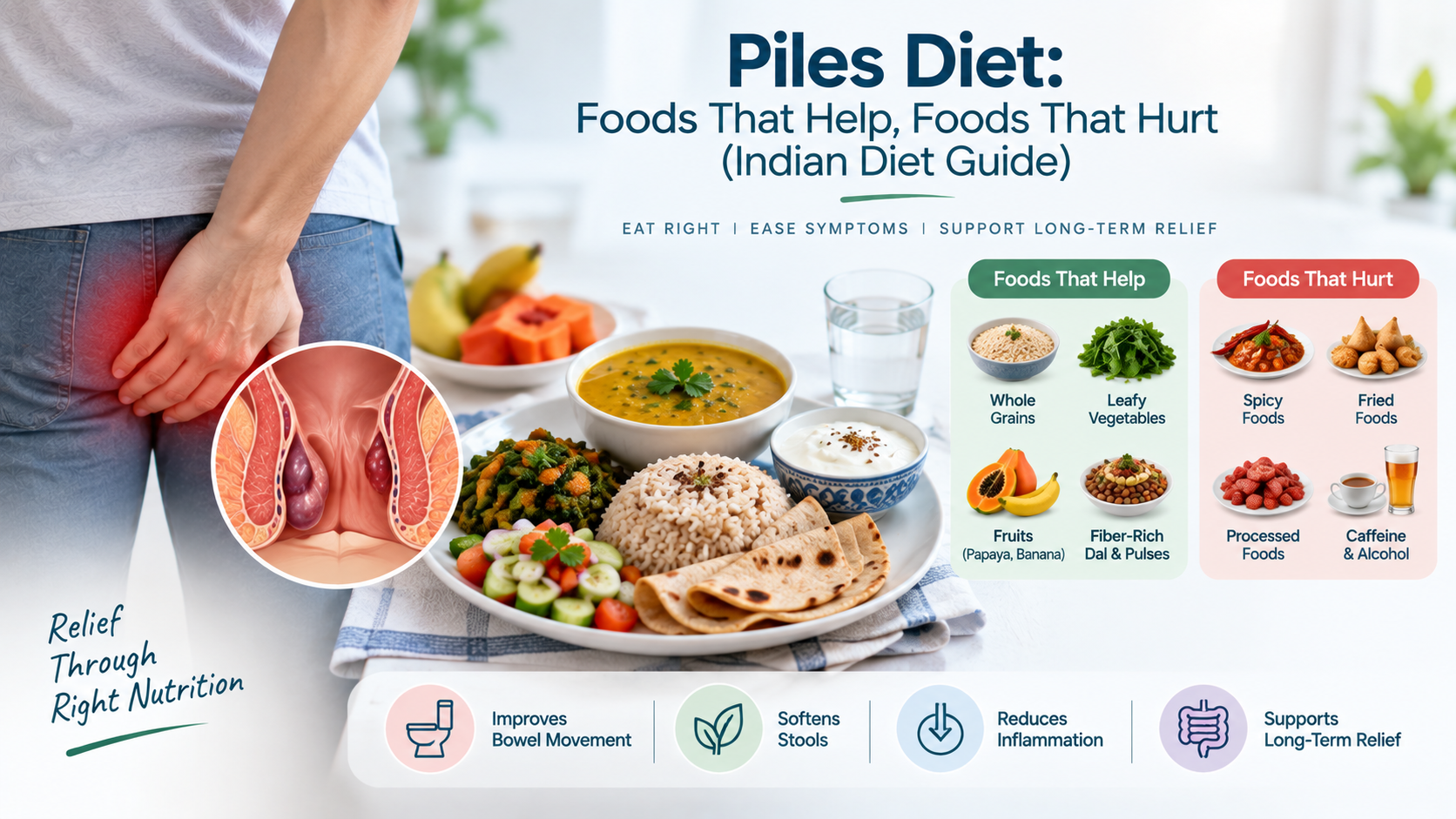
Diet alone will not cure piles that have already progressed to a stage needing medical treatment, but for many people, the right eating habits genuinely reduce flare-ups, ease symptoms, and support recovery alongside whatever treatment your doctor recommends. This guide focuses specifically on practical Indian foods, not generic Western diet advice that rarely maps onto an average Indian kitchen.
Piles are aggravated by straining during bowel movements, and straining happens most often when stools are hard or infrequent due to constipation. A diet that keeps stools soft and regular directly reduces the pressure that worsens piles, which is why diet is genuinely a meaningful part of management, not just a token suggestion.
Most adults benefit from roughly 25 to 30 grams of fibre daily, though many typical urban Indian diets, heavy in refined grains and processed food, fall well short of this. Building fibre intake gradually, rather than all at once, also helps avoid the bloating that can come from a sudden dietary shift.
Ragi, jowar, and bajra are excellent fibre sources and can replace refined wheat or rice in many meals, from rotis to porridge, with genuine digestive benefit.
Palak, methi, and other leafy greens, along with vegetables like bottle gourd and ridge gourd, add both fibre and water content, both helpful for softer stools.
Papaya, guava, and pears are particularly effective, with papaya especially well regarded for supporting easier digestion. Fruits are best eaten with their skin where appropriate, since much of the fibre is concentrated there.
Choosing whole wheat over refined maida, and brown rice over polished white rice where possible, meaningfully increases daily fibre intake without requiring major changes to familiar meals.
Dals, rajma, and chickpeas are good fibre sources, though introducing them gradually helps avoid excess gas, particularly if your current diet includes very little fibre.
Adequate water intake works together with fibre, not separately from it. Fibre without enough water can actually worsen constipation rather than ease it, since fibre absorbs water to add bulk to stool. Aiming for at least eight to ten glasses of water daily, more in hot weather, supports the softening effect that a high-fibre diet is meant to provide.
Diet is only part of the picture. Avoiding prolonged sitting on the toilet, not straining or holding your breath during a bowel movement, and responding promptly to the urge rather than delaying it, all reduce the pressure that aggravates piles, regardless of how well you are eating.
Someone with mild, Grade 1 piles makes a deliberate shift over a few weeks, replacing white rice with a mix of brown rice and millets, adding a serving of papaya most mornings, and increasing daily water intake noticeably. Within about a month, bowel movements become more regular and considerably less effortful, and the occasional discomfort that used to follow a bowel movement largely resolves. This kind of gradual dietary shift, sustained rather than a brief attempt, is a realistic and common pattern for people whose piles are at an early, diet-responsive stage.
| Meal | Suggestion |
|---|---|
| Breakfast | Ragi porridge or vegetable-loaded oats, with a glass of water |
| Mid-morning | A papaya or guava |
| Lunch | Brown rice or millet roti, dal, a leafy green vegetable, curd |
| Evening | Buttermilk or herbal tea, a handful of nuts |
| Dinner | Whole wheat roti, mixed vegetable sabzi, a small bowl of salad |
Diet meaningfully helps manage symptoms and supports prevention, particularly for Grade 1 and early Grade 2 piles, but it does not reverse more advanced piles that have already progressed. If your symptoms persist despite consistent dietary changes, or if you are experiencing bleeding, pain, or a growing lump, these are signs that a proper medical evaluation is needed rather than continuing to rely on diet alone. Understanding the grading system for piles helps clarify when this shift from diet management to medical treatment becomes necessary understanding the grading system for piles and supports prevention, particularly for Grade 1 and early Grade 2 piles, but it does not reverse more advanced piles that have already progressed. If your symptoms persist despite consistent dietary changes, or if you are experiencing bleeding, pain, or a growing lump, these are signs that a proper medical evaluation is needed rather than continuing to rely on diet alone. Understanding the grading system for piles helps clarify when this shift from diet management to medical treatment becomes necessary.
Not necessarily. Lean, well-balanced non-vegetarian meals are not inherently problematic for piles. The emphasis should be more about balance, relying heavily on red meat with very little fibre intake alongside it, rather than needing to eliminate non-vegetarian food altogether.
A high-fibre breakfast sets a helpful tone for the day. Options like vegetable upma with extra vegetables, ragi porridge, or oats with fruit all provide meaningful fibre first thing, compared to more refined options like plain white bread or heavily processed cereal.
If you would like a personalised laser hair removal quote based on your specific skin and hair type, book a consultation with our dermatology team.
Diet is a genuinely useful tool for managing piles, but it works best alongside an accurate understanding of your specific grade and symptoms, not as a stand-alone substitute for proper diagnosis. Yutika Hospital’s surgical team can confirm your grade and advise whether diet changes are enough for your case or whether treatment, including laser options, would serve you better. Learn more on our piles, fissure and fistula treatment page.
A balanced, consistent Indian diet built around fibre-rich foods like millets, leafy greens, and fruits genuinely helps manage piles symptoms and reduce flare-ups, particularly at earlier stages. Diet works best as part of a complete approach, alongside proper diagnosis and treatment when your specific case calls for it.
If dietary changes alone have not resolved your symptoms, book a consultation with our surgical team to discuss the right next step.
This article is intended for educational and informational purposes only and should not be considered medical advice, diagnosis, or treatment. Every individual’s health condition is unique. Always consult a qualified healthcare professional for personalized medical guidance. Do not ignore or delay seeking professional medical advice based on information provided in this article. If you are experiencing a medical emergency, seek immediate medical attention or contact your local emergency services.

Yutika Hospital is a trusted multi-speciality hospital in Tirupati offering advanced general surgery and dermatology treatments. We focus on accurate diagnosis, effective treatment, and personalized patient care.
Need more help?
Email support
2-120A, Rd Number 2, M.K. Naidu Colony, Lingeswar Nagar, Bairagi patteda, Tirupati, Andhra Pradesh 517501
Best Hospital in Tirupati for General Surgery & Dermatology Treatments
© 2026 Yutika Hospital, Tirupati. All Rights Reserved.