
Home » Piles Symptoms & Grades
If you have noticed blood after passing stool, a strange lump near your anus, or a burning, itchy discomfort that will not go away, you are probably searching for answers, and maybe feeling a little embarrassed about it. You do not need to be. Piles are one of the most common health conditions in adults, and most people who have them never talk about it, which is exactly why so many myths and so much confusion surround something that is usually very treatable.
This article walks you through what piles actually are, the four grades doctors use to describe them, the symptoms to watch for, what causes them, and, most importantly, how to know when it is time to stop guessing and see a doctor.
Piles, medically known as hemorrhoids, are swollen blood vessels in and around the anus and lower rectum. Everyone actually has these blood vessel cushions as a normal part of anatomy. They help control bowel movements. Piles happen when these vessels become swollen and inflamed, usually from repeated pressure or straining.
So if a doctor tells you that you have hemorrhoids, that is simply the clinical name for piles. There is no difference between the two.
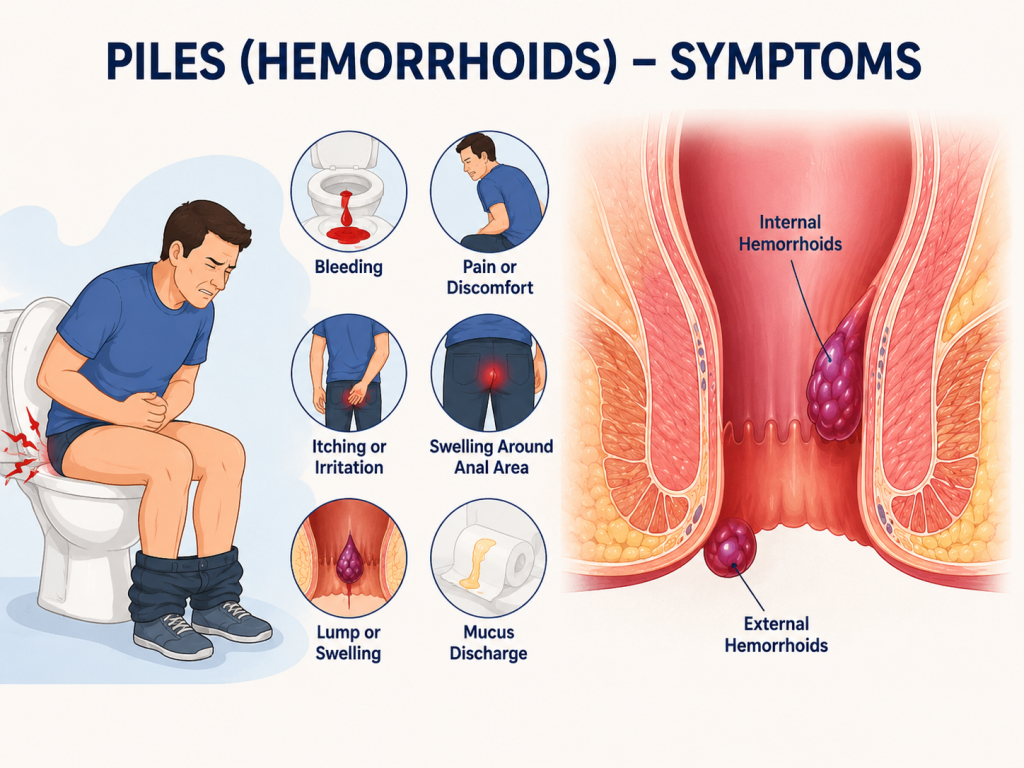
Piles are classified by location, and this matters because it affects what symptoms you notice first.
Internal piles form inside the rectum, where there are fewer pain sensing nerves. This is why internal piles often cause painless bleeding without much discomfort. You might only find out about them when you see blood.
External piles develop under the skin around the anus, in an area with many more nerve endings. These tend to cause more pain, itching, and swelling, and you can often feel a lump directly.
Some people have both at the same time, which is completely normal and just means both areas need attention.
Symptoms vary quite a bit depending on whether the piles are internal or external, and how advanced they are. Here is what tends to show up first.
None of these are dramatic on their own, which is exactly why people tend to ignore them for weeks or months.
Bright red blood on toilet paper or in the toilet bowl, usually not mixed into the stool itself, is the classic sign of piles. It typically happens during or right after a bowel movement and stops on its own.
That said, bleeding is also a symptom of several other conditions, some of which need urgent attention. Do not assume it is piles just because bleeding fits the pattern. See the red flag section below.
External piles, and internal piles that have prolapsed (more on that shortly), commonly cause:
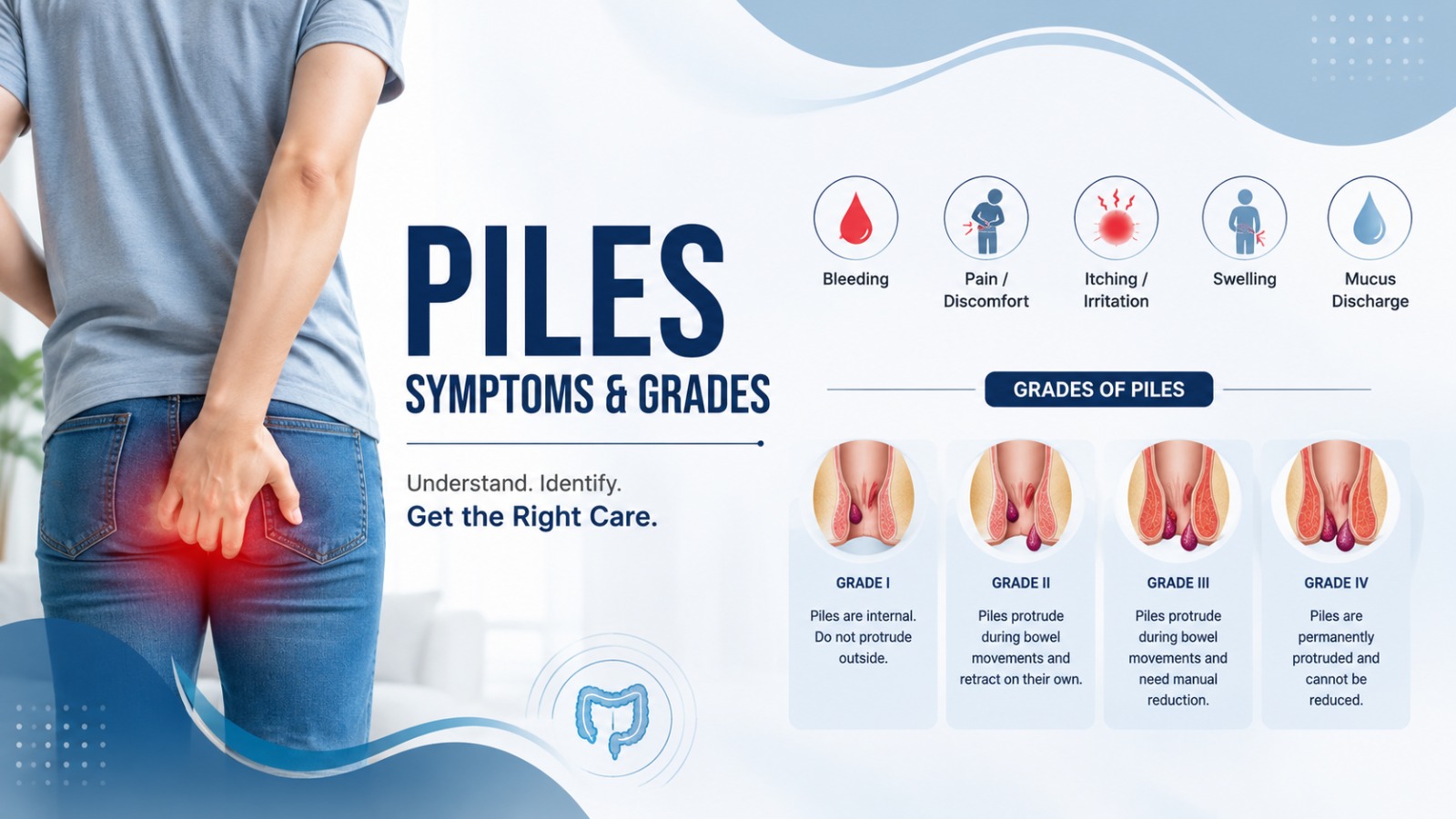
Doctors grade internal piles on a scale of 1 to 4 based on how far they prolapse, or protrude, out of the anus. This grading is not just academic. It directly shapes what treatment makes sense.
A quick way to think about it: the higher the grade, the less likely diet changes alone will resolve it, and the more likely a proper medical procedure is the right next step.
| Grade | What is Happening | What It Usually Means |
|---|---|---|
| Grade 1 | No prolapse. Piles stay inside, may cause mild bleeding | Often manageable with diet and lifestyle changes |
| Grade 2 | Prolapse during straining, but goes back in on its own | May still respond to conservative care, sometimes needs a minor procedure |
| Grade 3 | Prolapse during straining, needs to be pushed back in manually | Usually needs a procedure such as laser treatment |
| Grade 4 | Permanently prolapsed, cannot be pushed back in | Almost always needs surgical or laser treatment |
Piles develop when repeated pressure builds up in the veins around the anus and rectum. A few everyday habits are behind most cases.
Straining and chronic constipation. This is the single biggest contributor. Straining repeatedly puts direct pressure on these blood vessels.
Pregnancy. The combination of hormonal changes and the growing uterus pressing on pelvic veins makes piles common during and after pregnancy.
Sitting for long periods. Desk jobs, long drives, and long hours on two wheelers all increase pressure in the lower rectum over time.
Low fibre diet and dehydration. Not enough fibre or water leads to harder stools, which means more straining, and the cycle continues.
Age. The tissue supporting these blood vessels naturally weakens over time, which is why piles become more common after 45.
Someone notices a small, painless bulge in their groin after moving around furniture during shifting. Since it does not hurt and goes away when lying down, they decide to wait and see. Over the following months, the bulge grows larger and starts causing discomfort during work. What began as a simple, low-risk repair when first noticed becomes a more involved procedure months later, simply because of the delay. This progression, small and painless at first, larger and more symptomatic later, is the most common pattern seen with untreated hernias.
Piles affect men and women at similar rates overall, but the pattern differs slightly. In women, pregnancy and childbirth are major contributing factors, and piles often first appear or worsen during the third trimester or shortly after delivery. In men, prolonged sitting, heavy lifting, and diet tend to be the bigger drivers. The underlying condition and its grading system are identical for both. Only the common triggers differ.
Most piles symptoms are uncomfortable but not dangerous. However, certain signs need prompt medical evaluation because they could point to something more serious than piles:
These symptoms do not automatically mean something serious, but they do mean a doctor needs to look, rather than assuming it is piles based on symptoms alone.
This is often the part people worry about most, so it is worth demystifying. A piles consultation typically involves a conversation about your symptoms and bowel habits, a brief physical examination of the anal area, and in some cases, a simple internal examination using a small instrument to check for internal piles.
The exam is quick, and an experienced surgeon will explain each step before doing it. There is no reason to delay a consultation out of embarrassment. This is one of the most common reasons people visit a general surgeon, and doctors see it every single day.
It depends on the grade. Grade 1 piles often improve with dietary changes, more water, and avoiding straining, sometimes without any procedure at all. Grade 2 piles sometimes respond to the same conservative approach, though not always.
Grade 3 and Grade 4 piles, however, rarely resolve completely on their own. The tissue has stretched beyond the point where lifestyle changes alone can reverse it, and a procedure is usually the realistic path to lasting relief.
Treatment is matched to the grade and how much the symptoms are affecting daily life:
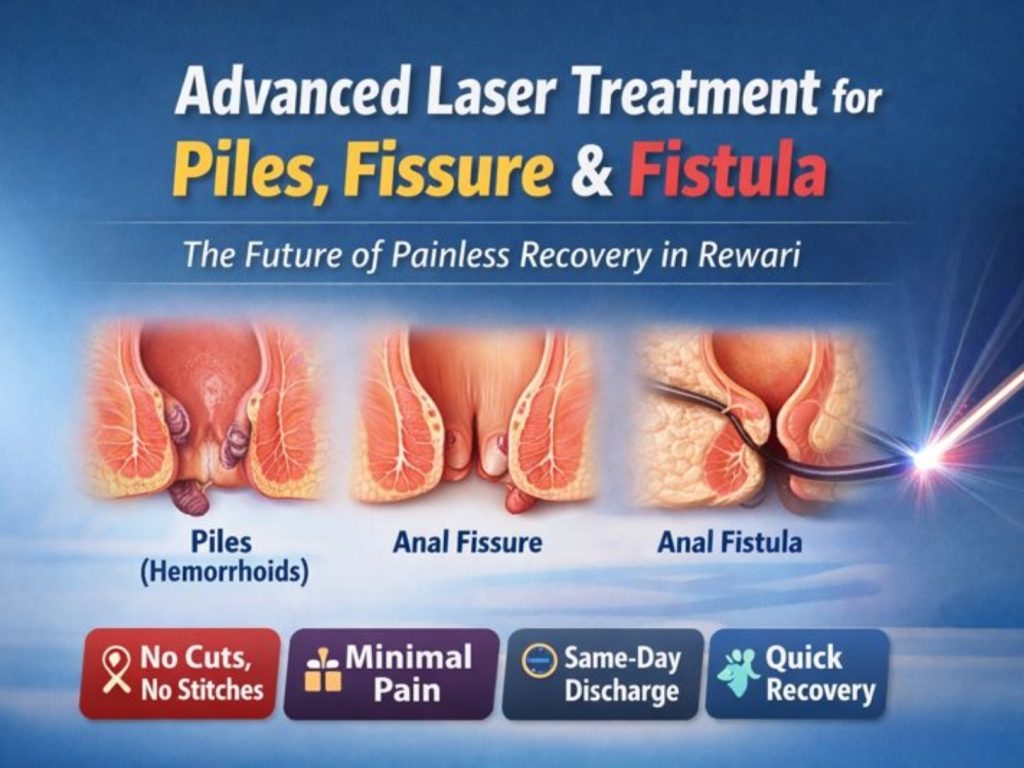
You can read more about how laser treatment works for piles, fissures, and fistula at Yutika Hospital, including what the procedure involves and what recovery typically looks like.
Book a confidential consultation with the Dermatology team at Yutika Hospital for an accurate diagnosis and a customized treatment plan.
As a simple checklist, it is time to book a consultation if:
If more than one of these applies to you, an in person evaluation will give you far more clarity than searching symptoms online ever can.
Waiting too long, hoping it resolves on its own. Grade 1 piles might. Higher grades usually need proper care.
Self medicating with random creams for months. These can mask symptoms without addressing the underlying cause, sometimes allowing the condition to progress.
Avoiding a doctor purely out of embarrassment. This is by far the most common, and most understandable, mistake, but it is also the one that costs people the most unnecessary discomfort.
Assuming all rectal bleeding is piles. As covered above, this is not always a safe assumption.
| Myth | Fact |
|---|---|
| Piles are caused by eating spicy food | Spicy food can irritate existing piles but does not cause them. Straining and pressure do. |
| Piles always need surgery | Many Grade 1 and some Grade 2 cases improve with diet and lifestyle changes alone. |
| Only older people get piles | Piles can affect adults of any age, especially those with desk jobs or during pregnancy. |
| Piles are a sign of cancer | Piles themselves are not cancerous, but any unexplained bleeding should still be checked to rule out other causes. |
| Once treated, piles always come back | With proper treatment and some lifestyle changes, recurrence is far from guaranteed. |
Piles are common, but getting an accurate diagnosis, including the correct grade, makes a real difference in choosing the right treatment. At Yutika Hospital’s General Surgery department, consultations are handled with the confidentiality and respect this condition deserves, and treatment recommendations are based on your specific grade and symptoms rather than a one size fits all approach. For patients who do need a procedure, laser treatment offers a minimally invasive option with a shorter recovery than traditional surgery.
Piles are uncomfortable, common, and, in the vast majority of cases, very treatable. The key is not guessing which grade you are dealing with or how serious it is based on symptoms alone, but getting an accurate diagnosis so the treatment actually matches what is going on. Whether that means a few changes to your diet or a same day laser procedure, knowing where you stand is the first real step toward feeling better.
If you have been putting off a conversation about this, reaching out for a confidential consultation is a small step that tends to bring a lot of relief, both physically and in simply not wondering anymore.
This article is intended for educational and informational purposes only and should not be considered medical advice, diagnosis, or treatment. Every individual’s health condition is unique. Always consult a qualified healthcare professional for personalized medical guidance. Do not ignore or delay seeking professional medical advice based on information provided in this article. If you are experiencing a medical emergency, seek immediate medical attention or contact your local emergency services.

Yutika Hospital is a trusted multi-speciality hospital in Tirupati offering advanced general surgery and dermatology treatments. We focus on accurate diagnosis, effective treatment, and personalized patient care.
Need more help?
Email support
2-120A, Rd Number 2, M.K. Naidu Colony, Lingeswar Nagar, Bairagi patteda, Tirupati, Andhra Pradesh 517501
Best Hospital in Tirupati for General Surgery & Dermatology Treatments
© 2026 Yutika Hospital, Tirupati. All Rights Reserved.