
Home » Chemical Peels Explained: Types, Benefits, Cost and What to Expect
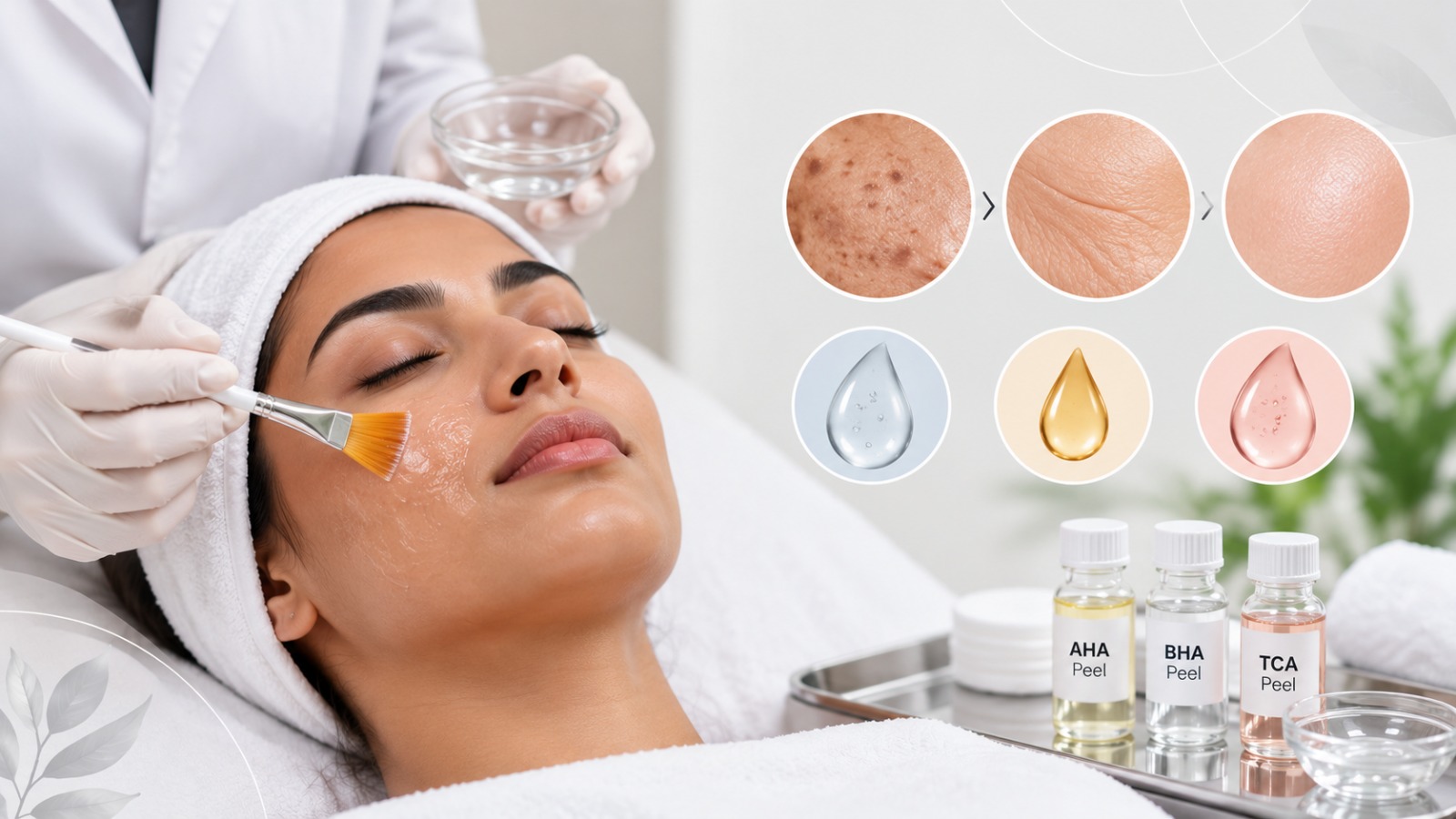
Chemical peels come up in almost every conversation about treating dull skin, acne marks, or pigmentation, but the term covers a much wider range of treatments than most people realize. Not every peel does the same thing, and choosing the wrong type for your issue is one of the most common reasons people feel disappointed with the results. This guide breaks down what a chemical peel actually is, the main types, and what genuinely realistic results look like.
A chemical peel uses a controlled chemical solution applied to the skin to remove its outermost layers. As the skin heals, it reveals a fresher and even-toned skin underneath. The specific solution, strength, and depth of the peel determine what issues it can address and how much downtime to expect.
These work on the outermost layer of the skin and are the mildest option, typically using glycolic acid or salicylic acid. Superficial peels are apt to treat mild dullness, minor texture concerns, and light acne. They generally involve minimal to no visible downtime.
These penetrate deeper into the skin and are effective for more noticeable pigmentation, fine lines, and moderate acne scarring. Medium peels typically involve some visible peeling and redness for several days.
The most intensive option, reaching the deeper layers of skin to address more significant concerns like deep wrinkles or pronounced scarring. Deep peels involve considerably more downtime and are used less frequently as they are usually reserved for niche cases under close dermatologist supervision.
| Concern | Typical Peel Type | What to Expect |
|---|---|---|
| Dullness, mild texture | Superficial (glycolic, lactic) | Minimal downtime, gradual improvement over several sessions |
| Acne and mild acne marks | Superficial to medium (salicylic) | Reduced breakouts over time, some peeling possible |
| Pigmentation, melasma | Medium, dermatologist-selected | Gradual fading over multiple sessions, sun protection essential |
| Acne scarring | Medium, often combined with other treatments | Best results usually take a full treatment course, not one session |
| Deep wrinkles | Deep peel (rare, specific cases) | Significant downtime, closely supervised |
The entire procedure typically takes well under an hour, and most superficial peels involve little more discomfort than a mild tingling or warm sensation.

Downtime is entirely influenced by the depth of the peel. Superficial peels often involve no visible peeling at all, just a temporary glow. Medium peels typically involve a few days of visible flaking or redness. Regardless of peel type, sun protection afterward is an absolute must. Peeled skin is significantly more sensitive to sun damage, and skipping sunscreen after a peel can undo much of the benefit, or even worsen pigmentation.
Yes, when performed by a qualified dermatologist who selects the right type and strength for your specific skin tone. Indian skin has a higher risk of post-inflammatory pigmentation if a peel is too aggressive or not matched correctly to skin type, which is exactly why professional assessment matters more than following a generic online routine or an unsupervised salon treatment.
Someone with stubborn acne marks tries a generic, at-home glycolic peel kit for a few months with minimal change, then switches to salon-grade peels without a proper skin assessment, which leaves their skin more sensitive and slightly patchy. A dermatologist consultation identifies that their marks are actually post-inflammatory pigmentation rather than simple texture unevenness, better suited to a specifically selected medium peel over a planned series of sessions rather than a generic superficial option. This kind of mismatch between the actual skin concern and the peel type chosen is extremely common when there is lack of professional supervision.
Chemical peels are one of several options for pigmentation and skin texture concerns, alongside treatments like laser therapy and microneedling. For acne scarring specifically, many patients ask how peels compare to microneedling, which is covered in more detail in our acne scar treatment comparison blog.
Chemical peels are also a common treatment choice for melasma and facial pigmentation- a specific pattern of dark patches that behaves differently from general dullness or acne marks and needs its own tailored approach. Our melasma and facial pigmentation blog covers more about this in detail.
Book a confidential consultation with the Dermatology team at Yutika Hospital for an accurate diagnosis and a customized treatment plan.
Most concerns require a series of sessions rather than a single treatment, typically spaced a few weeks apart to allow the skin to fully recover between peels. A dermatologist will outline an expected session count based on your specific skin and goal, since this varies significantly by concern and peel type.
Over the counter fairness creams work differently from a dermatologist administered peel, and are generally far less effective for genuine pigmentation concerns. Some also carry risks, especially products containing unregulated steroids. A supervised chemical peel offers a controlled, monitored approach that a regular product in the market simply cannot match.
Chemical peels work best when the type, strength, and treatment plan are matched precisely to your skin, not chosen generically. Yutika Hospital’s dermatology team conducts a proper skin assessment before recommending any peel, with realistic expectations set from the very first consultation rather than inflating result claims.
A chemical peel can genuinely improve dullness, pigmentation, and texture, but only when the type is correctly matched to what your skin actually needs. Skipping the professional assessment and choosing a peel based on generic online advice is the most common reason for results falling short of expectations.
If you are considering a chemical peel, book a skin consultation with our dermatology team to find the right type for your skin.
This article is intended for educational and informational purposes only and should not be considered medical advice, diagnosis, or treatment. Every individual’s health condition is unique. Always consult a qualified healthcare professional for personalized medical guidance. Do not ignore or delay seeking professional medical advice based on information provided in this article. If you are experiencing a medical emergency, seek immediate medical attention or contact your local emergency services.

Yutika Hospital is a trusted multi-speciality hospital in Tirupati offering advanced general surgery and dermatology treatments. We focus on accurate diagnosis, effective treatment, and personalized patient care.
Need more help?
Email support
2-120A, Rd Number 2, M.K. Naidu Colony, Lingeswar Nagar, Bairagi patteda, Tirupati, Andhra Pradesh 517501
Best Hospital in Tirupati for General Surgery & Dermatology Treatments
© 2026 Yutika Hospital, Tirupati. All Rights Reserved.