
Home » Lump Under the Skin? Lipoma vs Sebaceous Cyst and When to Get It Removed
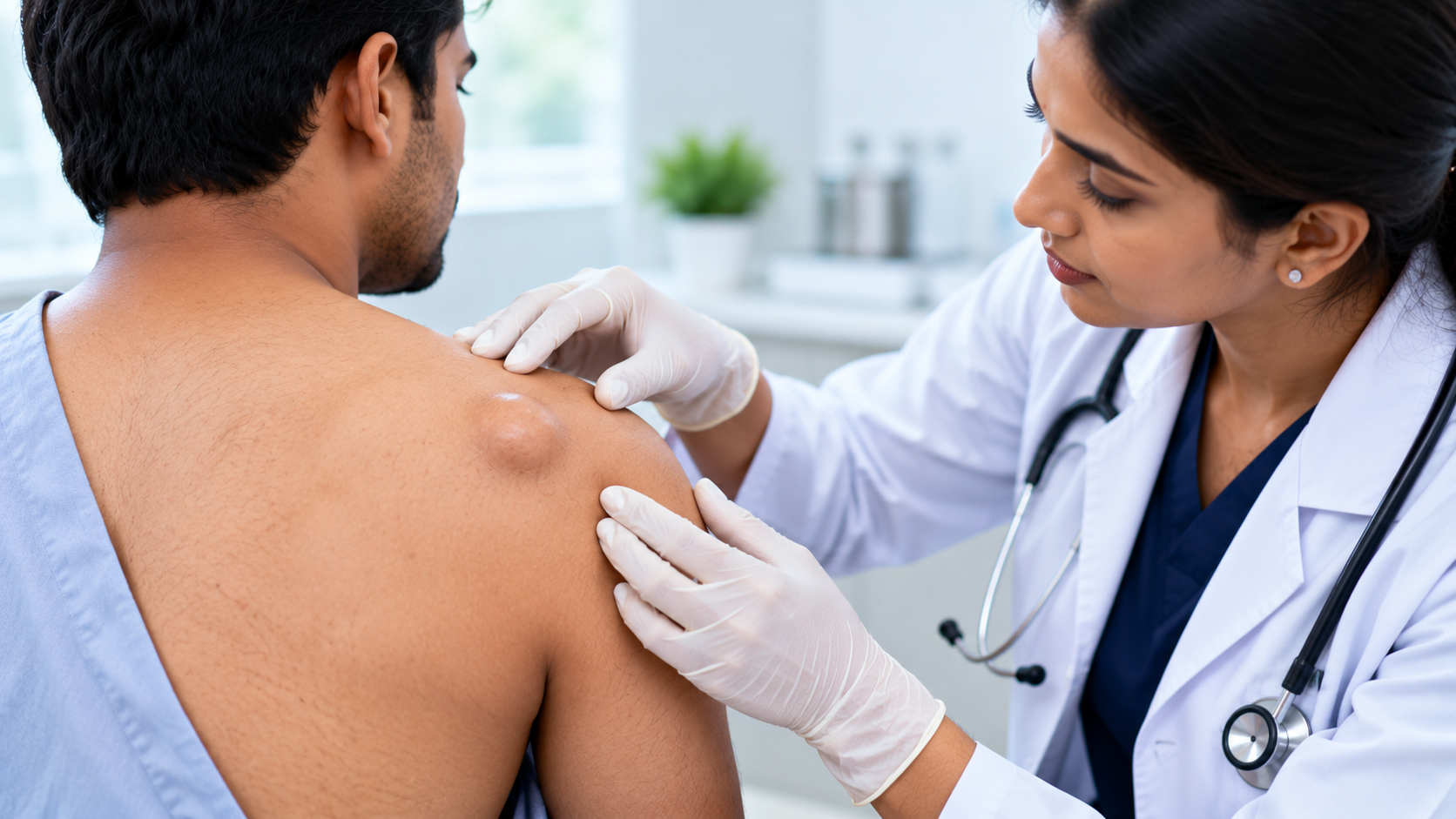
Finding a lump under your skin can be unsettling. It might be a soft swelling on your shoulder that has been there for years, or a small, firm bump on your back that sometimes becomes red and painful. Most such lumps are harmless, and the two most common are lipomas and sebaceous cysts. They look similar from the outside but are quite different underneath, and that difference affects how they should be treated.
This guide explains how to tell them apart, why squeezing or “dissolving” lumps at home does not work, the warning signs that need prompt attention, and what to expect from simple lump removal surgery.
Less commonly, a lump can be a tumour that needs further evaluation, which is why any new or changing lump should be examined.
Smaller areas like the upper lip or underarms are generally the least expensive per session, given the smaller surface area and shorter treatment time. Larger areas like full legs or full body treatment cost more per session but often work out to a better value per square inch when purchased as a package.
What most people call a sebaceous cyst is usually an epidermoid cyst: a small sac within the skin, lined by skin cells, that fills with keratin. It feels firmer than a lipoma, is attached to the skin, and often has a tiny dark opening on the surface called a punctum. When pressed, it may release a thick, cheesy, foul-smelling material. Cysts are common on the face, neck, back, scalp and behind the ears, and they can become infected, turning red, swollen and painful.
| Feature | Lipoma | Sebaceous (Epidermoid) Cyst |
|---|---|---|
| How it feels | Soft, doughy and rubbery | Firm, rounded and tense |
| Position | Under the skin; skin moves freely over it | Within the skin; attached to it |
| Central opening | None | Often a small dark pore (punctum) |
| Discharge | None | May release thick, cheesy, foul-smelling material |
| Infection | Rare | Common; can become red, painful and form an abscess |
| Growth | Slow, over months to years | Slow, but can swell quickly when inflamed |
| Treatment | Surgical excision if needed | Complete excision of the cyst and its wall |
No cream, oil, herbal paste or tablet has been shown to dissolve a lipoma or a cyst. Squeezing a cyst may empty some of its contents, but the wall remains, so it refills, and squeezing often pushes bacteria deeper and causes infection and scarring. Cutting or puncturing a lump at home is risky and should be avoided. If a lump is harmless and not bothering you, simply watching it is a reasonable choice; if it needs to go, surgical removal is the only reliable option.
Many lipomas and small cysts can be left alone safely. Removal is usually recommended when the lump:
See a surgeon soon if a lump:
A lump in the breast should always be examined by a doctor, whatever its feel. Our breast lump evaluation and removal page explains how breast lumps are assessed. If you have a swelling in the front of the neck that moves when you swallow, it may be related to the thyroid rather than the skin, and our thyroid swelling treatment page explains how that is evaluated.
Most lipomas and cysts are removed as a short daycare procedure:
The procedure typically takes 20 to 45 minutes, and most patients go home the same day. Larger or deeper lumps may need a different approach. If a cyst is actively infected, the surgeon usually drains it and treats the infection first, then removes the cyst once the swelling has settled. Our body lump removal in Tirupati covers lipomas, cysts and other soft tissue swellings, while small lesions within the skin can also be treated through skin excision surgery.
| Time After Surgery | What to Expect |
|---|---|
| Day 1 to 2 | Mild soreness, managed with simple painkillers; keep the dressing clean and dry |
| Days 5 to 14 | Stitches are removed, earlier on the face and later on the back or limbs |
| About 2 weeks | Most normal activities resume; avoid strain on the area if the lump was large |
| Several months | The scar continues to soften and fade |
Most people return to office work within a day or two. Contact your surgeon if you notice increasing pain, redness, swelling, discharge or fever.
When a lipoma is removed completely with its capsule, recurrence is uncommon. A cyst can return if part of its wall remains, which is why complete excision matters, and why squeezing or draining alone usually fails. People who tend to form multiple lipomas may develop new ones in other places over time, but these are new lumps rather than a return of the old one.
A 45-year-old man has had a soft lump on his shoulder for three years. It has slowly grown and now rubs against his bag strap. An ultrasound confirms a lipoma. It is removed under local anaesthesia in about half an hour, and he returns to work the next day. His stitches are removed a week later, and the laboratory report confirms a benign lipoma.
If you would like a personalised laser hair removal quote based on your specific skin and hair type, book a consultation with our dermatology team.
The right treatment for a lump starts with the right diagnosis. Yutika Hospital’s general surgery team in Tirupati examines each lump carefully, uses ultrasound where needed, and removes lipomas and cysts completely through small, neat incisions under local anaesthesia, with every specimen sent for confirmation. Learn more about our lipoma and cyst removal services.
Most lumps under the skin are lipomas or sebaceous cysts, and both are usually harmless. Lipomas are soft and move freely, while cysts are attached to the skin and prone to infection. Neither can be dissolved with creams or remedies, but both can be removed simply and safely when needed. Any lump that is large, hard, painful or growing should be examined promptly.
If you have a lump that is growing, painful or simply bothering you, book a consultation with our surgical team.
This article is intended for educational and informational purposes only and should not be considered medical advice, diagnosis, or treatment. Every individual’s health condition is unique. Always consult a qualified healthcare professional for personalized medical guidance. Do not ignore or delay seeking professional medical advice based on information provided in this article. If you are experiencing a medical emergency, seek immediate medical attention or contact your local emergency services.

Yutika Hospital is a trusted multi-speciality hospital in Tirupati offering advanced general surgery and dermatology treatments. We focus on accurate diagnosis, effective treatment, and personalized patient care.
Need more help?
Email support
2-120A, Rd Number 2, M.K. Naidu Colony, Lingeswar Nagar, Bairagi patteda, Tirupati, Andhra Pradesh 517501
Best Hospital in Tirupati for General Surgery & Dermatology Treatments
© 2026 Yutika Hospital, Tirupati. All Rights Reserved.