
Home » Mouth Ulcers That Keep Coming Back: Causes, Relief and When to Worry
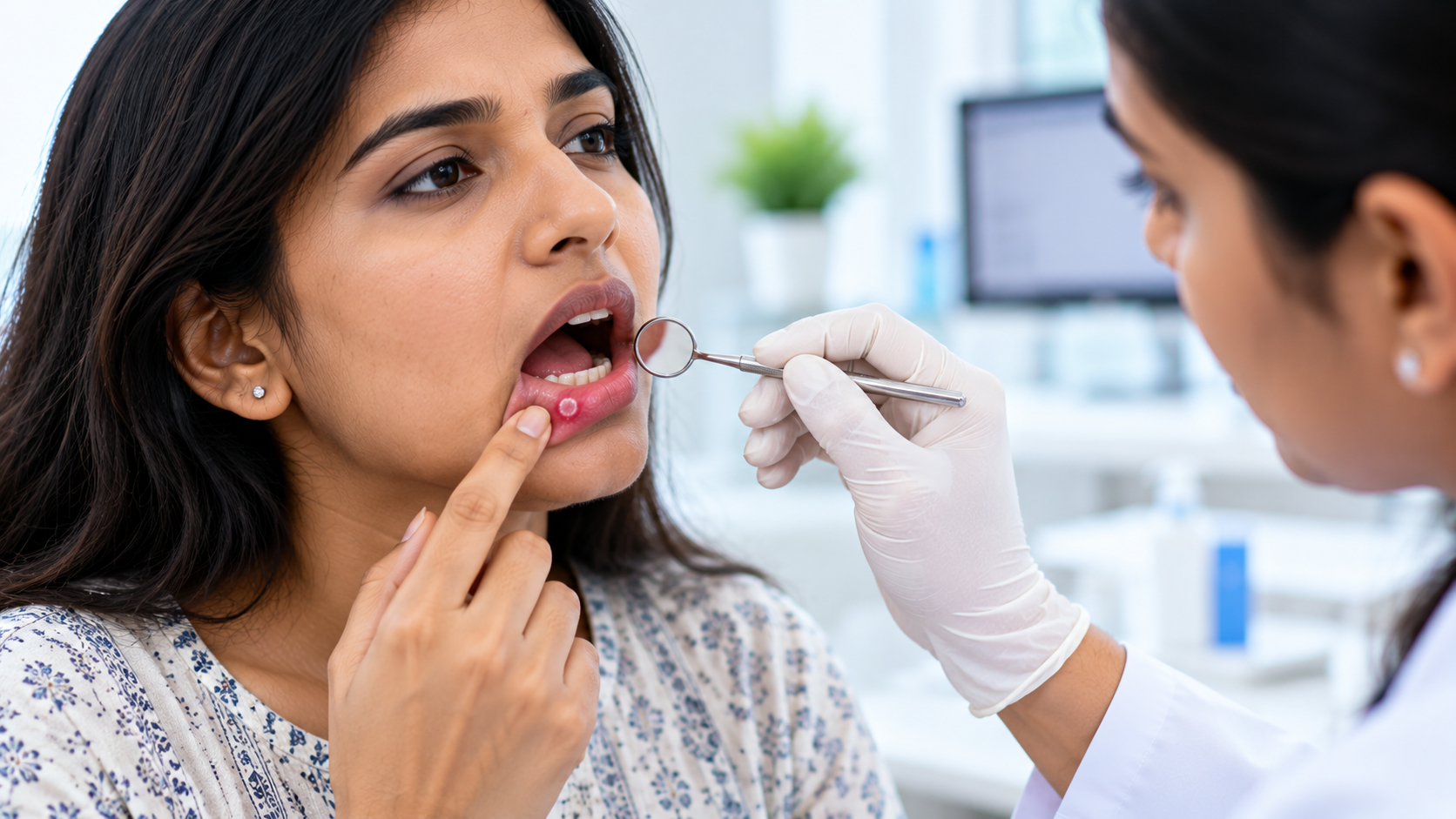
A single mouth ulcer can make eating, drinking and even talking painful for a week or more. When ulcers return every few weeks, it is natural to wonder whether something is wrong. Most people try home remedies, change their diet or blame “body heat”, but the ulcers keep coming back.
Recurring mouth ulcers are one of the most common problems affecting the mouth, and in most cases they are harmless. They do, however, often have an identifiable trigger, such as a vitamin deficiency, that can be treated. Occasionally, a mouth ulcer is a sign of something more serious. This guide explains the common causes, how to get quick relief and the warning signs that need prompt attention.
The most common mouth ulcers are called aphthous ulcers. They are round or oval sores with a white or yellow centre and a red border, and they appear on the inside of the lips and cheeks, on the tongue or under it. They are painful, especially when eating spicy or sour food, and usually heal on their own within one to two weeks. When they keep coming back, doctors call the condition recurrent aphthous stomatitis.
| Symptom | What It May Suggest |
|---|---|
| Weight gain, tiredness, feeling cold, dry skin, constipation | An underactive thyroid (hypothyroidism) |
| Weight loss, palpitations, tremor, sweating, feeling hot | An overactive thyroid (hyperthyroidism) |
| Difficulty swallowing or a feeling of pressure in the neck | A large goitre pressing on the food pipe |
| Breathlessness, especially when lying flat | A goitre pressing on the windpipe or extending behind the breastbone |
| Hoarse voice lasting more than a few weeks | Needs prompt evaluation |
| A hard lump that is growing quickly | Needs urgent evaluation |
Accidentally biting the cheek, brushing too hard, sharp tooth edges, braces or ill-fitting dentures can all start an ulcer.
Low levels of vitamin B12, iron, folic acid and zinc are well-known causes of recurring ulcers. Vitamin B12 deficiency is particularly common in India because B12 comes mainly from animal foods, so people on vegetarian diets are at higher risk. Treating the deficiency often reduces how often ulcers appear.
Many people notice ulcers during exams, work deadlines or periods of poor sleep. Some women find ulcers appear around their periods.
Very spicy, sour or acidic foods, nuts and chocolate can trigger ulcers in some people. Toothpastes containing sodium lauryl sulphate (SLS) may also play a role in sensitive individuals.
Less commonly, recurring ulcers are linked to conditions such as coeliac disease, inflammatory bowel disease, Behçet’s disease, certain infections, or reactions to medicines. These are usually suspected when ulcers come with other symptoms, such as stomach problems, weight loss, joint pain or sores elsewhere on the body.
Avoid applying aspirin, alcohol or strong home remedies directly on the ulcer, as these can burn the delicate lining of the mouth.
Home remedies relieve the pain of each ulcer, but they do not address the reason ulcers keep forming. If a vitamin deficiency, a sharp tooth, a toothpaste ingredient or a medical condition is responsible, the ulcers will return until that cause is found and treated. This is why recurring ulcers, particularly those appearing every month or more often, are worth a proper evaluation.
Most mouth ulcers are harmless, but India has a high burden of oral cancer, largely linked to tobacco, gutka and areca nut (supari) use. See a doctor without delay if you notice:
Early evaluation of a non-healing ulcer, sometimes with a small biopsy, is simple and can be lifesaving.
| Condition | Typical Features | Contagious? |
|---|---|---|
| Aphthous ulcers | Round, painful sores with a white centre inside the mouth | No |
| Cold sores (herpes) | Small blisters on or around the outer lips, often with tingling first | Yes |
| Oral thrush | White patches that can be wiped off, leaving red areas | Not usually |
| Oral lichen planus | Lacy white lines or sore red areas on the cheeks | No |
| Possible oral cancer | A non-healing, often painless ulcer or patch, sometimes hard to touch | No, but needs urgent evaluation |
Dermatologists treat diseases of the skin and the lining of the mouth, and recurrent ulcers are a common reason people consult them. Evaluation usually includes a look at the pattern and appearance of your ulcers and, where needed, blood tests for haemoglobin, vitamin B12, folate, iron (ferritin) and zinc. Treatment may include:
Our mouth ulcer treatment in Tirupati focuses on finding the cause, not just relieving each episode.
A 27-year-old software professional, a lifelong vegetarian, has been getting painful mouth ulcers almost every month for two years. He has tried several gels and home remedies, with only short-term relief. Blood tests show low vitamin B12 levels. After a course of B12 supplements and dietary advice, his ulcers become much less frequent, and the occasional one heals faster. Treating the cause made the difference.
If you would like a personalised laser hair removal quote based on your specific skin and hair type, book a consultation with our dermatology team.
Recurring mouth ulcers deserve more than another tube of gel. Yutika Hospital’s dermatology department looks for the underlying cause with a careful examination and targeted tests, treats deficiencies and triggers, and evaluates any non-healing ulcer promptly. Learn more about our approach on our recurring mouth ulcer treatment page.
Most mouth ulcers are harmless and heal on their own, but ulcers that keep returning usually have a cause that can be found and treated. Simple blood tests often reveal a deficiency, and treating it can greatly reduce how often ulcers appear. Any ulcer that does not heal within three weeks should always be checked.
If mouth ulcers keep coming back or one is not healing, book a consultation with our dermatology team.
This article is intended for educational and informational purposes only and should not be considered medical advice, diagnosis, or treatment. Every individual’s health condition is unique. Always consult a qualified healthcare professional for personalized medical guidance. Do not ignore or delay seeking professional medical advice based on information provided in this article. If you are experiencing a medical emergency, seek immediate medical attention or contact your local emergency services.

Yutika Hospital is a trusted multi-speciality hospital in Tirupati offering advanced general surgery and dermatology treatments. We focus on accurate diagnosis, effective treatment, and personalized patient care.
Need more help?
Email support
2-120A, Rd Number 2, M.K. Naidu Colony, Lingeswar Nagar, Bairagi patteda, Tirupati, Andhra Pradesh 517501
Best Hospital in Tirupati for General Surgery & Dermatology Treatments
© 2026 Yutika Hospital, Tirupati. All Rights Reserved.