
Home » PRP Therapy for Hair Loss: Procedure, Sessions, Results and Cost
PRP therapy comes up constantly in conversations about hair regrowth, often with big promises attached. The honest picture is more nuanced than most marketing suggests: PRP genuinely helps a specific group of patients, works less well for others, and understanding which category you fall into matters more than the treatment’s popularity.
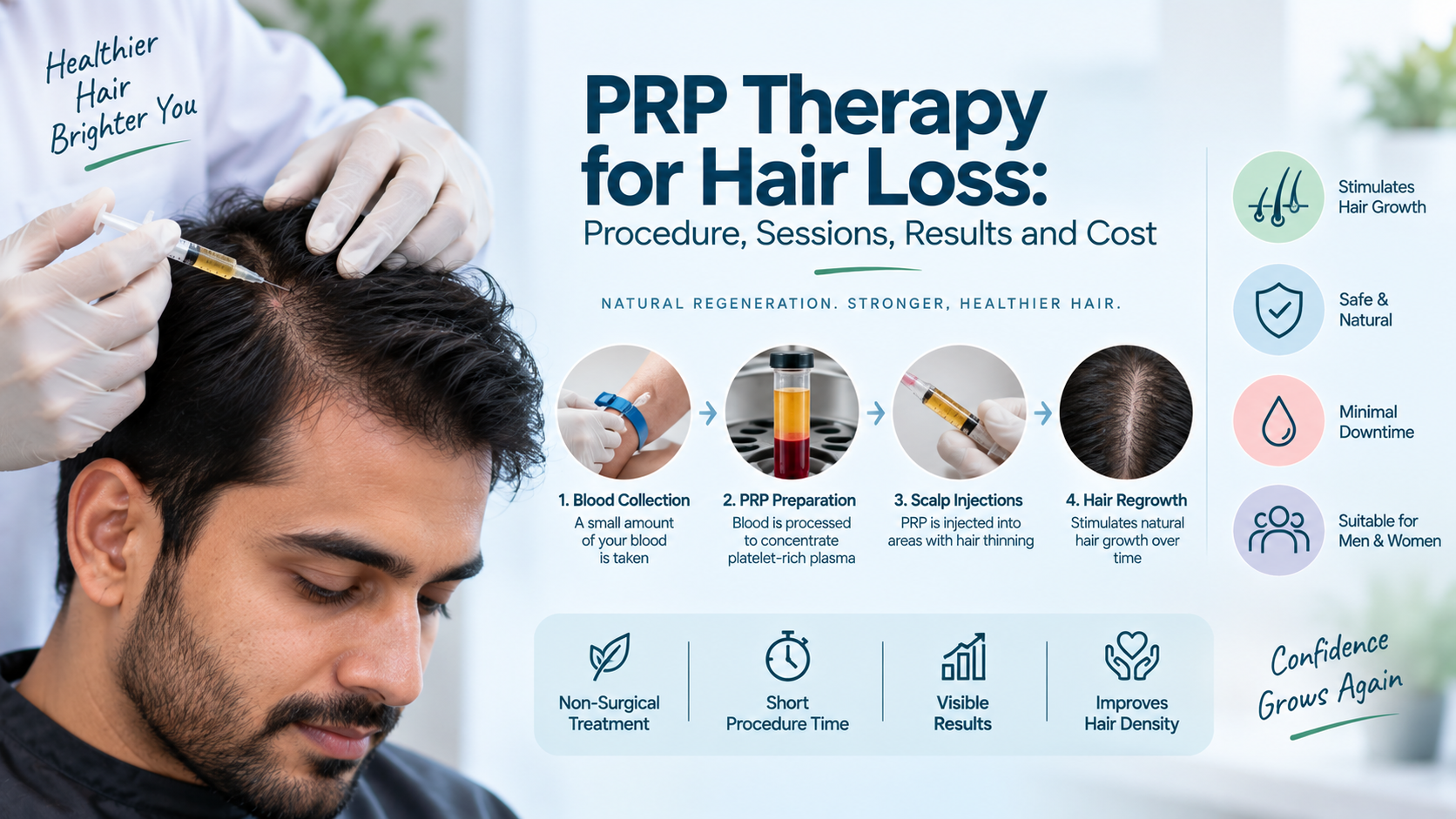
PRP stands for platelet-rich plasma. A small sample of your own blood is drawn and processed in a centrifuge to concentrate the platelets, which contain growth factors. This concentrated plasma is then injected into areas of the scalp with thinning hair, with the aim of stimulating existing hair follicles.
PRP tends to work best for people in the earlier stages of hair thinning, where follicles are still present but producing weaker, finer hair, rather than areas that have been completely bald for an extended period. It is commonly used for early-stage pattern hair loss in both men and women.
This is worth being direct about, since it is often left out of promotional material. PRP cannot regrow hair in areas where follicles have been dormant for a very long time or have stopped functioning entirely. For advanced, long-standing baldness, PRP alone is unlikely to produce meaningful new growth, and a dermatologist should tell you this honestly during your consultation rather than promising results that are unlikely for your specific stage of hair loss.
The entire procedure typically takes under an hour, and most patients return to normal activity the same day.
Most treatment plans involve an initial series of three to six sessions, spaced around four to six weeks apart, followed by periodic maintenance sessions, often every six months to a year, to sustain results. This is not a one-time treatment, and patients considering PRP should plan for this ongoing commitment rather than expecting a single session to produce lasting change.
Visible improvement, when it occurs, typically becomes noticeable after the third or fourth session rather than immediately. Full assessment of whether PRP is working for you generally takes a few months into the initial treatment series. Results also vary meaningfully between individuals, some see clear improvement in hair thickness and reduced shedding, while others see more modest changes.
| Treatment | Best For | Downtime | Ongoing Commitment |
|---|---|---|---|
| PRP Therapy | Early-stage thinning, active follicles present | None to minimal | Ongoing maintenance sessions |
| Topical/Oral Medication | Various stages, often used alongside other treatments | None | Continuous daily use |
| Hair Transplant | Advanced hair loss with donor area available | Longer recovery period | One-time procedure, though may need touch-ups |
PRP and medication are often combined for better results than either alone, and your dermatologist can advise whether combination treatment suits your specific pattern of hair loss.
Most patients describe mild discomfort during the injections, often manageable with a topical numbing cream applied beforehand. It is generally considered a well-tolerated outpatient procedure.
Someone in their late twenties with noticeably thinning hair at the crown, but no areas of complete baldness, begins a PRP series after research and high expectations from online success stories. After the third session, they notice new, finer hairs growing in previously thin patches, alongside an overall reduction in daily shedding. A different patient, in their fifties with long-standing, extensive baldness at the same clinic, is advised during consultation that PRP alone is unlikely to regrow hair in the fully bald areas, and a combination approach or different treatment path is discussed instead. This honest, stage-specific guidance, rather than a one-size-fits-all recommendation, is what actually determines whether PRP is worth pursuing for a given individual.
Since PRP uses your own blood, allergic reaction risk is minimal. Mild redness, tenderness, or swelling at the injection sites is common for a day or two afterward, and generally resolves on its own.
These treatments serve different purposes rather than directly competing. PRP supports and strengthens existing follicles, while a hair transplant relocates hair from a donor area to a balding area. For extensive hair loss with limited remaining follicles, a transplant may be more appropriate, while PRP suits earlier-stage thinning. You can read more about the broader range of causes behind hair thinning in our hair fall causes and treatment blog.
PRP outcomes genuinely vary based on the underlying cause of hair loss, the stage of thinning, and individual biological response. A clinic promising guaranteed, dramatic results for every patient is not being fully transparent. A reasonable, evidence-based approach involves a proper assessment first, honest expectations set based on your specific case, and a treatment plan that may include PRP alongside other approaches available at our hair loss and baldness treatment page.
If you would like a personalised laser hair removal quote based on your specific skin and hair type, book a consultation with our dermatology team.
PRP works best when recommended for the right candidate, not offered as a universal solution. Yutika Hospital’s dermatology team assesses your specific stage of hair loss honestly before recommending PRP, setting realistic expectations about results and the ongoing commitment involved, rather than overselling the treatment.
PRP therapy is a genuinely useful tool for the right candidate, not a universal fix for every type of hair loss. Understanding whether your specific stage of thinning is likely to respond, and setting honest expectations about the number of sessions and ongoing maintenance involved, is what separates a worthwhile treatment decision from a disappointing one.
If you are considering PRP for hair thinning, book a consultation with our dermatology team for an honest assessment of your options.
This article is intended for educational and informational purposes only and should not be considered medical advice, diagnosis, or treatment. Every individual’s health condition is unique. Always consult a qualified healthcare professional for personalized medical guidance. Do not ignore or delay seeking professional medical advice based on information provided in this article. If you are experiencing a medical emergency, seek immediate medical attention or contact your local emergency services.

Yutika Hospital is a trusted multi-speciality hospital in Tirupati offering advanced general surgery and dermatology treatments. We focus on accurate diagnosis, effective treatment, and personalized patient care.
Need more help?
Email support
2-120A, Rd Number 2, M.K. Naidu Colony, Lingeswar Nagar, Bairagi patteda, Tirupati, Andhra Pradesh 517501
Best Hospital in Tirupati for General Surgery & Dermatology Treatments
© 2026 Yutika Hospital, Tirupati. All Rights Reserved.