
Home » Fungal Skin Infections in Humid Weather: Why They Keep Coming Back
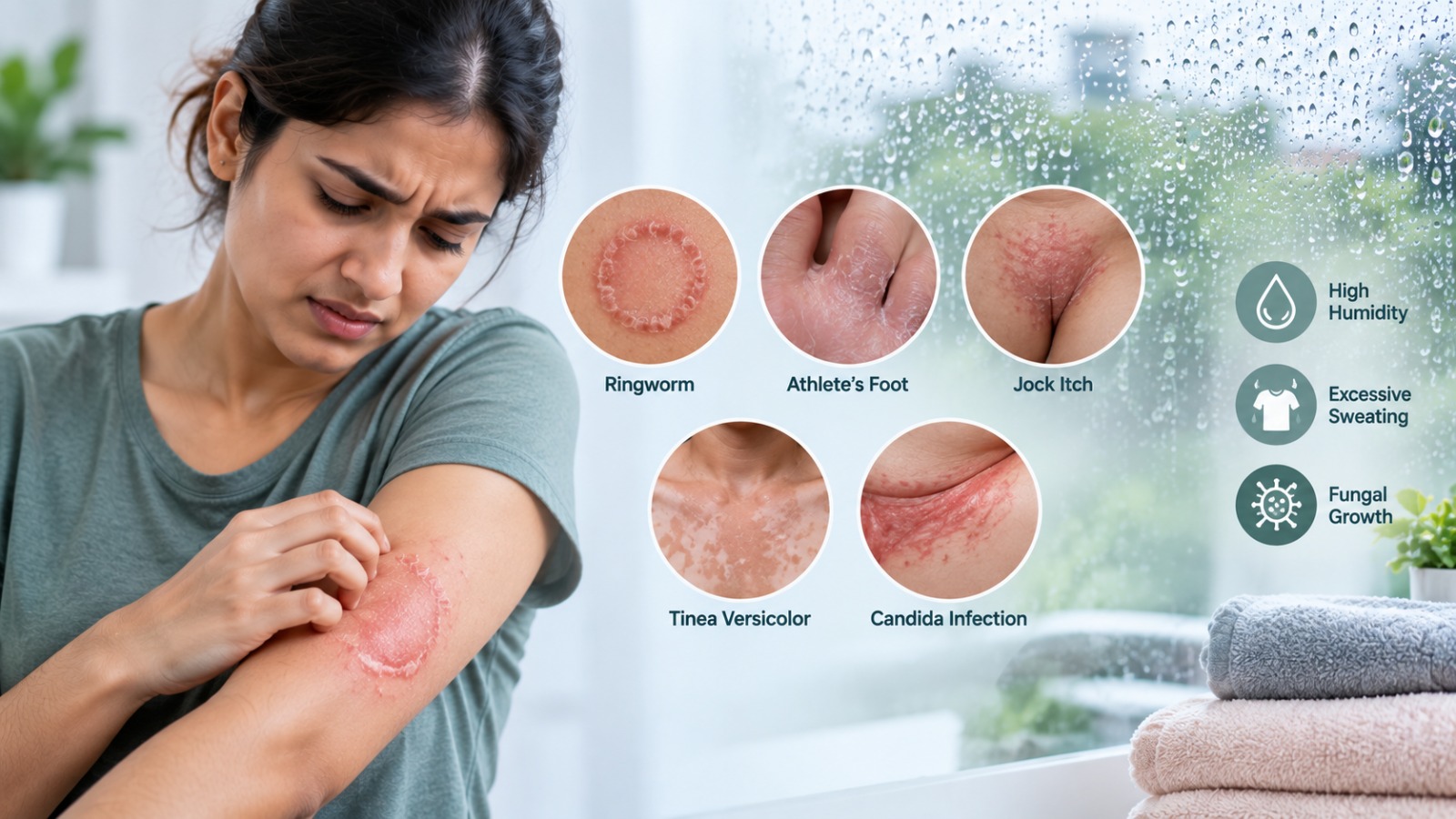
If you live somewhere warm and humid, chances are you have dealt with a stubborn, itchy patch of skin that seems to clear up with a cream, only to resurface in a few weeks. Fungal skin infections are extremely common in this kind of climate, and the frustrating cycle of temporary relief followed by recurrence usually comes down to a few specific, fixable missteps in how they are treated.
Fungi grow best in sultry, moist environments, which makes skin folds, areas that trap sweat, and generally humid weather the perfect conditions for them to multiply. Tight clothing, prolonged sweating, and not drying off thoroughly after bathing all add to the problem, which is why fungal infections spike in certain climatic conditions and seasons.
Despite the name, ringworm has nothing to do with worms. It is a fungal infection that typically appears as a red, ring-shaped, itchy patch with a slightly raised, scaly border and a clearer center.
A fungal infection affecting the groin and inner thigh area, typical in hot weather due to sweating and friction in that region.
Affects the feet, particularly between the toes, and is common among people who wear closed shoes for long periods of time and do not dry their feet thoroughly.
This is one of the most typical reasons as to why fungal infections keep resurfacing. Many combination creams available without a prescription contain a steroid along with an antifungal ingredient. The steroid can make the itching and redness improve quickly, which feels like the infection is clearing, but steroids actually suppress the skin’s local immune response, allowing the fungus to continue spreading underneath while the surface symptoms look better.
This creates an annoying loop: quick relief, followed by the infection returning, often larger or more widespread than before. Many patients unknowingly repeat this cycle for months, reapplying the same cream each time symptoms return.

Not every itchy, red patch is a fungal infection. Eczema, psoriasis, and other skin conditions may look similar on some occasions and using an antifungal cream on a non-fungal condition will not help, and can possibly worsen the predicament. If you are trying to understand which chronic, itchy skin condition you are actually dealing with, our psoriasis vs eczema blog is a useful starting point. A dermatologist can usually identify a fungal infection through its appearance, and in less clear cases, a simple skin scraping test can confirm the diagnosis.
Someone develops an itchy, ring-shaped patch on their inner thigh and buys a combination cream recommended at a local pharmacy. The itching and redness improve within a few days, so they stop using it. Within a few weeks, the patch returns, larger than before, and the cycle repeats two more times over several months. A dermatologist consultation reveals the cream being used contains a steroid, which explains both the quick relief and the recurring pattern. Switching to a proper antifungal course, used for the full recommended duration even after symptoms improve, finally breaks the cycle.
Effective fungal infection treatment typically involves a dedicated antifungal medication, either topical or oral depending on the extent of the infection, used for the full recommended duration, which is often longer than symptoms take to visibly improve. Stopping early, even when the itching and redness are gone, is one of the most common reasons for recurrence, since the fungus can still be present at a level below what is visible.
Book a confidential consultation with the Dermatology team at Yutika Hospital for an accurate diagnosis and a customized treatment plan.
Yes, fungal skin infections can spread through direct skin contact, as well as through shared clothing, towels, or bedding. This is part of why treating just one affected area on one person, without addressing shared household items, often leads to reinfection.
Some home remedies can offer mild, temporary relief from itching, but they do not eliminate the underlying fungal infection the way a proper antifungal treatment does. Relying on home remedies alone can only extend the infection’s persistence and increases the chance of it spreading to other areas or family members.
Topical treatment is sufficient for many localized infections, but oral antifungal medication may be recommended for more widespread infections that have not responded to topical treatment, or certain types of fungal infections that are harder to reach with a cream alone. This call is best made by a dermatologist based on the specific extent and type of infection.
Fungal infections that keep returning are almost always fixable once properly diagnosed and treated with the right medication for the full recommended course. Yutika Hospital’s dermatology team identifies the actual cause behind persistent skin patches, rather than continuing the cycle of quick-relief creams that lead to recurrence. You can explore care from our dermatologist in Tirupati for this and related skin concerns.
Recurring fungal infections are frustrating, but the cycle is almost always explainable, usually a steroid-combination cream masking symptoms, or treatment stopped too soon. Understanding this pattern, and switching to a proper antifungal course completed in full, is what actually breaks the cycle rather than managing it indefinitely.
If you are dealing with a fungal infection that keeps returning, book a consultation with our dermatology team before it spreads further.
This article is intended for educational and informational purposes only and should not be considered medical advice, diagnosis, or treatment. Every individual’s health condition is unique. Always consult a qualified healthcare professional for personalized medical guidance. Do not ignore or delay seeking professional medical advice based on information provided in this article. If you are experiencing a medical emergency, seek immediate medical attention or contact your local emergency services.

Yutika Hospital is a trusted multi-speciality hospital in Tirupati offering advanced general surgery and dermatology treatments. We focus on accurate diagnosis, effective treatment, and personalized patient care.
Need more help?
Email support
2-120A, Rd Number 2, M.K. Naidu Colony, Lingeswar Nagar, Bairagi patteda, Tirupati, Andhra Pradesh 517501
Best Hospital in Tirupati for General Surgery & Dermatology Treatments
© 2026 Yutika Hospital, Tirupati. All Rights Reserved.