
Home » Acne Scars: Which Treatment Actually Works? An Honest Comparison
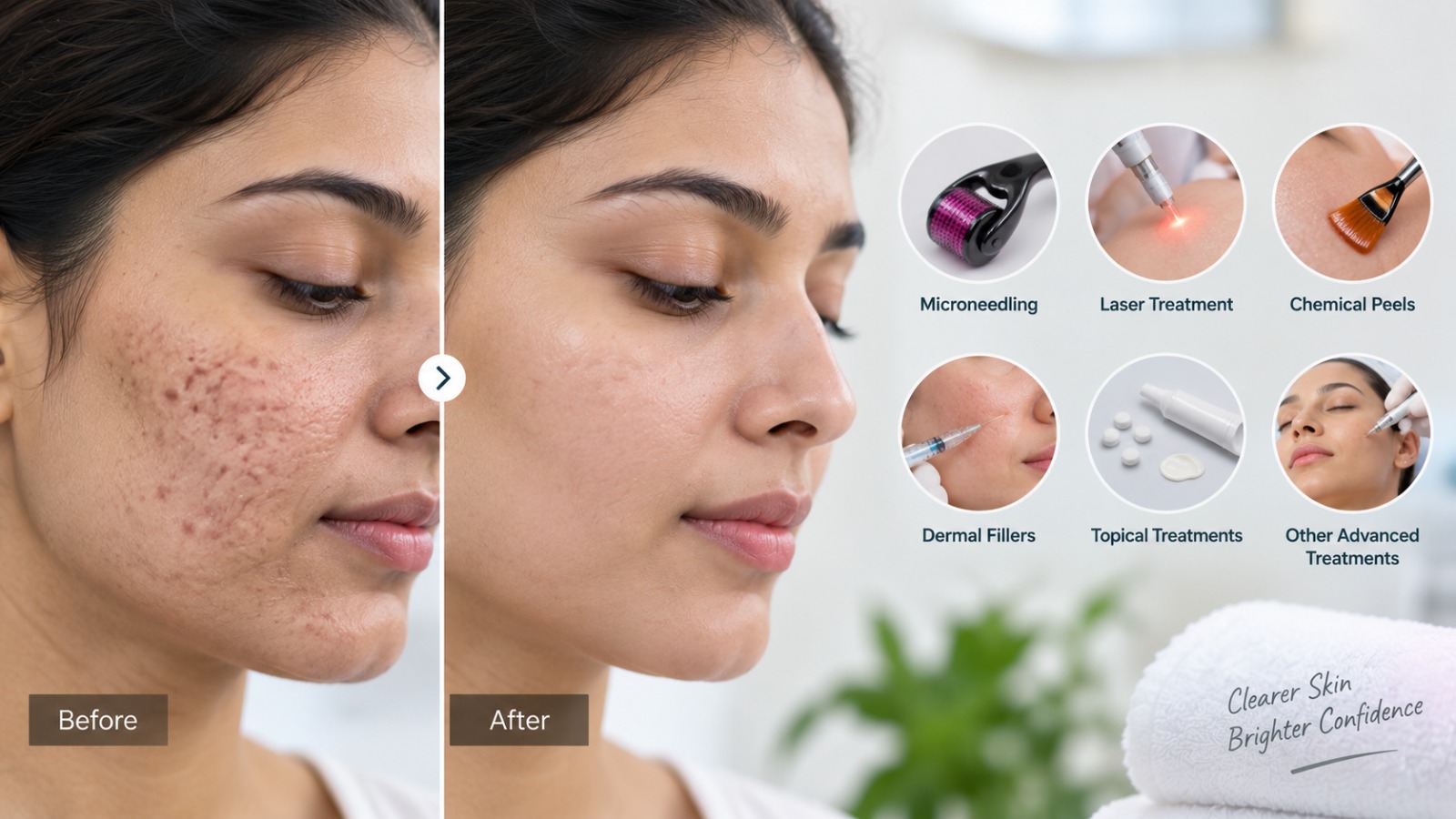
Acne scars are one of the most common reasons people search for dermatology treatments, and also one of the most confusing, because the internet is full of conflicting claims about what actually works. The honest answer is that no single treatment fits every scar, since acne scars come in different shapes and depths, each responding differently to different approaches.
Before comparing treatments, it is imperative to know that not all acne scars are the same. Different scar types react differently, which is exactly why a treatment that worked well for a friend may not deliver similar results for a different scar pattern.
Narrow, deep scars that go straight down into the skin, resembling a small puncture. These usually prove to be the more challenging scar types to treat.
Broader, box-shaped scars with defined edges, often shallower than ice-pick scars but with a more visible surface area.
Wider scars with a smooth, rolling appearance caused by tethering beneath the skin surface, giving the skin an uneven, wavy texture.
Because these three scar types have different underlying structures, they respond differently to treatment. A treatment that smooths rolling scars effectively may do very little for a deep ice-pick scar, and vice versa and this is precisely why a proper assessment of scar type matters more than picking a treatment based on general online popularity.
Microneedling uses fine needles to create controlled micro-injuries in the skin, which stimulates the body’s natural collagen production as part of the healing process. Over a series of sessions, this process improves the texture of rolling and shallow boxcar scars. You can read more about how this treatment works on our derma roller therapy page.
Results build gradually over several sessions rather than appearing after just one treatment and improvement continues for a period after the sessions are complete, as collagen production goes on.
Medium-depth chemical peels can help to accentuate the appearance of shallow acne scarring by stimulating controlled skin renewal, though they tend to work best on more superficial scarring rather than deep ice-pick scars. Peels can also help to treat the post-acne pigmentation that often accompanies acne scarring. You can learn more about how peels work for different concerns on our chemical peels guide.

Laser treatments work by removing the outer layers of skin, encouraging fresh skin growth and improved texture as time passes. Certain laser types are particularly effective for deeper or more textured scarring but the specific laser and settings need to be matched carefully to skin tone, particularly for Indian skin, to avoid the side effects of pigmentation.
| Treatment | Best For | Downtime | Sessions Typically Needed |
|---|---|---|---|
| Microneedling / Derma Roller | Rolling and shallow boxcar scars | Mild redness for a day or two | Multiple sessions, spaced weeks apart |
| Chemical Peels | Superficial scarring and post-acne pigmentation | Varies by peel depth, often minimal | Multiple sessions over time |
| Laser Resurfacing | Deeper or more textured scarring | Varies by laser type, can be more significant | Depends on laser type and scar severity |
Since most people have a mix of scar types rather than just one, dermatologists typically recommend a combination approach- for example microneedling for rolling scars alongside a chemical peel for accompanying pigmentation. This precisely calculated combination typically produces better overall results than relying on a single treatment type to treat every scar on the face.
It is important to be direct about: acne scar treatment can meaningfully improve texture and appearance, but complete removal, especially of deeper ice-pick scars, is not always practically possible. A good dermatologist will set honest expectations based on your specific scar depth and type, rather than promising a result that the scar type simply cannot achieve.
Someone with a mix of rolling scars on their cheeks and a few deeper ice-pick scars near their jaw tries an at-home derma roller for several months with only mild improvement on the shallower areas and no visible change on the deeper scars. A dermatologist assessment explains this pattern directly, at-home devices are far less effective than professional-grade microneedling, and the deeper ice-pick scars likely need a different, more targeted approach altogether. A combination plan, professional microneedling for the rolling scars and a more targeted treatment for the ice-pick scars, produces noticeably better results than the single at-home approach ever did.
Most patients describe the sensation as mild discomfort rather than significant pain, particularly with a numbing cream applied beforehand, which is standard practice before professional microneedling sessions.
Book a confidential consultation with the Dermatology team at Yutika Hospital for an accurate diagnosis and a customized treatment plan.
At-home devices generally use much shorter needle lengths than professional equipment for safety reasons, which significantly limits their effectiveness for genuine scar improvement. They may offer very mild benefits for overall skin texture but are unlikely to meaningfully improve established acne scarring the way a professional, dermatologist-supervised treatment can.
Acne scar treatment works best when it is matched precisely to your specific scar types, often through a combination of approaches rather than a single generic treatment. Yutika Hospital’s dermatology team assesses your scarring in detail and builds a realistic, tailored treatment plan, with honest expectations set from the very first consultation.
There is no single best acne scar treatment, only the right treatment for your specific scar type. Rolling scars, boxcar scars, and ice-pick scars each respond differently to microneedling, peels, and laser treatment, which is why a proper assessment matters far more than following generic advice about what worked for someone else.
If acne scars are a concern for you, book an assessment with our dermatology team to find the right approach for your skin.
This article is intended for educational and informational purposes only and should not be considered medical advice, diagnosis, or treatment. Every individual’s health condition is unique. Always consult a qualified healthcare professional for personalized medical guidance. Do not ignore or delay seeking professional medical advice based on information provided in this article. If you are experiencing a medical emergency, seek immediate medical attention or contact your local emergency services.

Yutika Hospital is a trusted multi-speciality hospital in Tirupati offering advanced general surgery and dermatology treatments. We focus on accurate diagnosis, effective treatment, and personalized patient care.
Need more help?
Email support
2-120A, Rd Number 2, M.K. Naidu Colony, Lingeswar Nagar, Bairagi patteda, Tirupati, Andhra Pradesh 517501
Best Hospital in Tirupati for General Surgery & Dermatology Treatments
© 2026 Yutika Hospital, Tirupati. All Rights Reserved.