
Home » Psoriasis vs Eczema: Key Differences & Treatment | Yutika
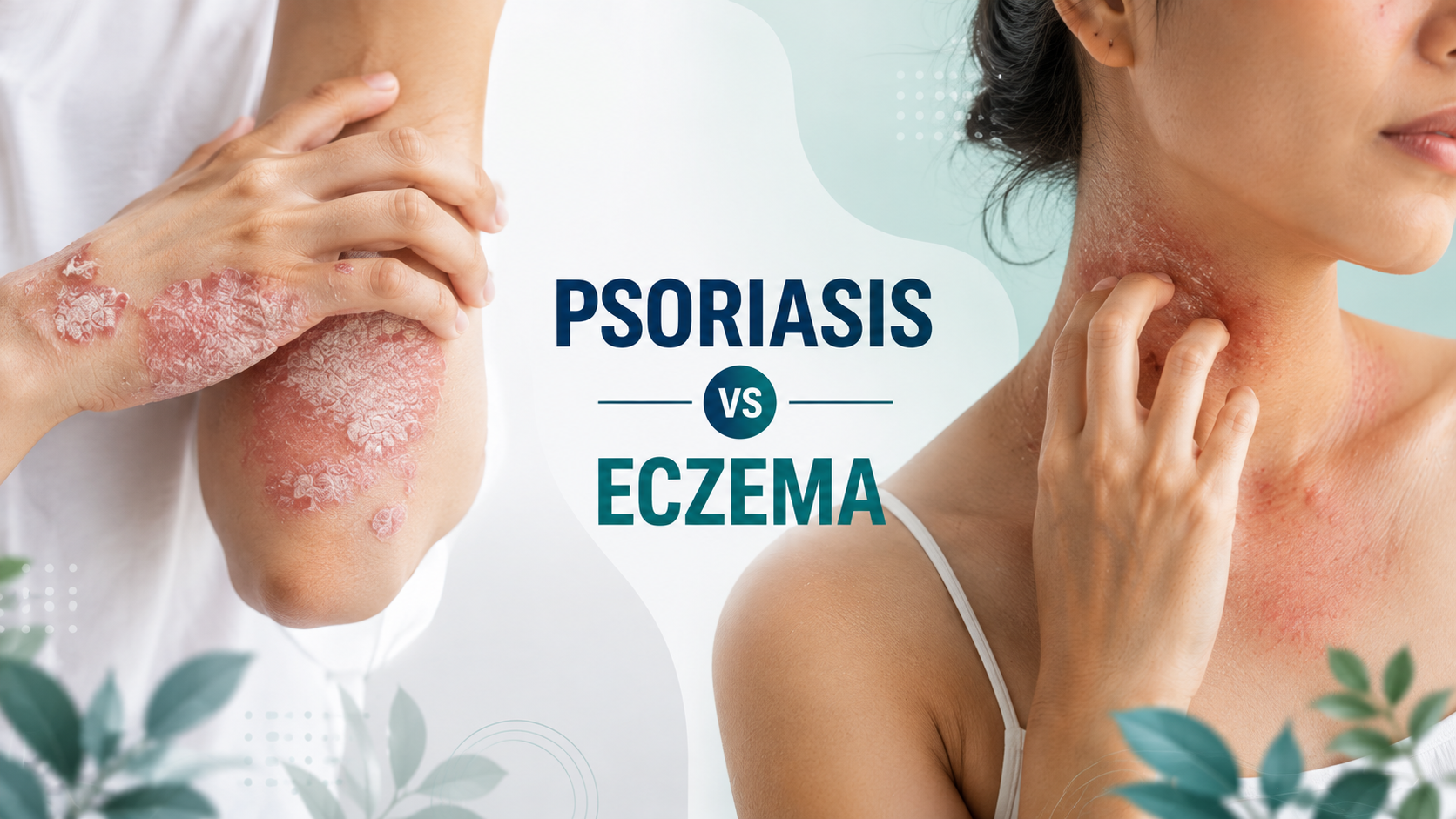
Red, itchy, patchy skin can mean a lot of different things, and two of the most commonly confused conditions are psoriasis and eczema. They can look surprisingly similar at first glance, which leads a lot of people to self treat with the wrong approach for months before finally seeing a dermatologist. Understanding the real differences can save you that time, and point you toward the treatment that actually works for what you have.
Both conditions cause redness, itching, and visible skin patches, and both tend to flare up and calm down over time rather than following a steady, predictable course. From a distance, or in early stages, they can genuinely be difficult to tell apart, even for some patients who have lived with one condition for years.
Psoriasis is a chronic autoimmune condition where skin cells build up faster than normal, forming thick, raised patches, often covered with a silvery white scale. It commonly affects the elbows, knees, scalp, and lower back, though it can appear anywhere on the body.
Eczema, also called atopic dermatitis, causes inflamed, intensely itchy skin that often appears less thick and more moist or weepy compared to psoriasis, particularly during a flare up. It is commonly linked to allergies, asthma, and a family history of similar skin sensitivity.
| Feature | Psoriasis | Eczema |
|---|---|---|
| Texture | Thick, raised, well defined edges | Softer, sometimes moist or weepy |
| Scaling | Silvery white scale, often prominent | Less scaling, more redness and inflammation |
| Common locations | Elbows, knees, scalp, lower back | Inner elbows, behind knees, face and neck |
| Itching | Present, but often less intense than eczema | Often intensely itchy |
| Typical trigger | Stress, infections, certain medications | Allergens, irritants, dry weather, stress |
| Underlying cause | Autoimmune | Skin barrier and immune sensitivity, often allergy linked |
One of the more reliable clues is where the patches appear. Psoriasis tends to favor the outer, extensor surfaces of joints, like the outside of the elbows and knees, along with the scalp and lower back. Eczema more often appears on the inner, flexor surfaces, like the inside of the elbows and behind the knees, and very commonly affects the face in infants and young children.
Psoriasis flare ups are often linked to stress, infections such as strep throat, certain medications, and skin injury. Eczema flare ups are more commonly triggered by allergens, harsh soaps or detergents, dry weather, sweating, and certain fabrics like wool.
Because the two conditions look somewhat similar, it is common for people to try a generic anti itch cream or a moisturizer marketed for sensitive skin, without realizing that psoriasis and eczema often respond to different types of treatment. A product that calms eczema related inflammation may do very little for psoriasis, and vice versa, which is why weeks or months can pass without real improvement.
Someone notices thick, scaly patches on their elbows and assumes it is simply very dry skin, applying regular moisturizer for weeks with no change. A dermatologist examination reveals the well defined, silvery scaling characteristic of psoriasis rather than ordinary dryness or eczema. Once correctly identified, an appropriate treatment plan brings noticeably faster improvement than the moisturizer ever did. This kind of misidentification is extremely common, particularly in early or mild cases.
Psoriasis treatment often focuses on slowing the excess skin cell production and calming the immune response, which may involve topical treatments, phototherapy, or other options depending on severity. Eczema treatment typically focuses on repairing and protecting the skin barrier, reducing inflammation, and identifying and avoiding specific triggers. You can read more about how we approach psoriasis specifically on our psoriasis treatment page.
Neither condition is contagious. Both involve internal factors, immune response in the case of psoriasis, and a combination of genetics and skin barrier function in the case of eczema, rather than anything that can spread from person to person through contact.
If you would like a personalised laser hair removal quote based on your specific skin and hair type, book a consultation with our dermatology team.
Getting the right diagnosis between psoriasis and eczema changes the entire treatment approach, which is why an accurate examination matters more than guessing based on appearance alone. Yutika Hospital’s dermatology team evaluates your specific skin pattern, history, and triggers to confirm which condition you are dealing with, and builds a treatment plan around that diagnosis rather than a generic skin care routine.
Psoriasis and eczema share enough visual similarities to genuinely confuse patients and delay proper treatment, but they are different conditions requiring different approaches. Looking closely at where the patches appear, how they feel, and what seems to trigger them can offer useful clues, but a dermatologist examination is the only reliable way to know for certain, and it is the fastest route to treatment that actually works.
If you have persistent, unexplained skin patches, book a consultation with our dermatology team to get an accurate diagnosis.
This article is intended for educational and informational purposes only and should not be considered medical advice, diagnosis, or treatment. Every individual’s health condition is unique. Always consult a qualified healthcare professional for personalized medical guidance. Do not ignore or delay seeking professional medical advice based on information provided in this article. If you are experiencing a medical emergency, seek immediate medical attention or contact your local emergency services.

Yutika Hospital is a trusted multi-speciality hospital in Tirupati offering advanced general surgery and dermatology treatments. We focus on accurate diagnosis, effective treatment, and personalized patient care.
Need more help?
Email support
2-120A, Rd Number 2, M.K. Naidu Colony, Lingeswar Nagar, Bairagi patteda, Tirupati, Andhra Pradesh 517501
Best Hospital in Tirupati for General Surgery & Dermatology Treatments
© 2026 Yutika Hospital, Tirupati. All Rights Reserved.