
Home » Hair Fall Causes & Treatments That Actually Work | Yutika
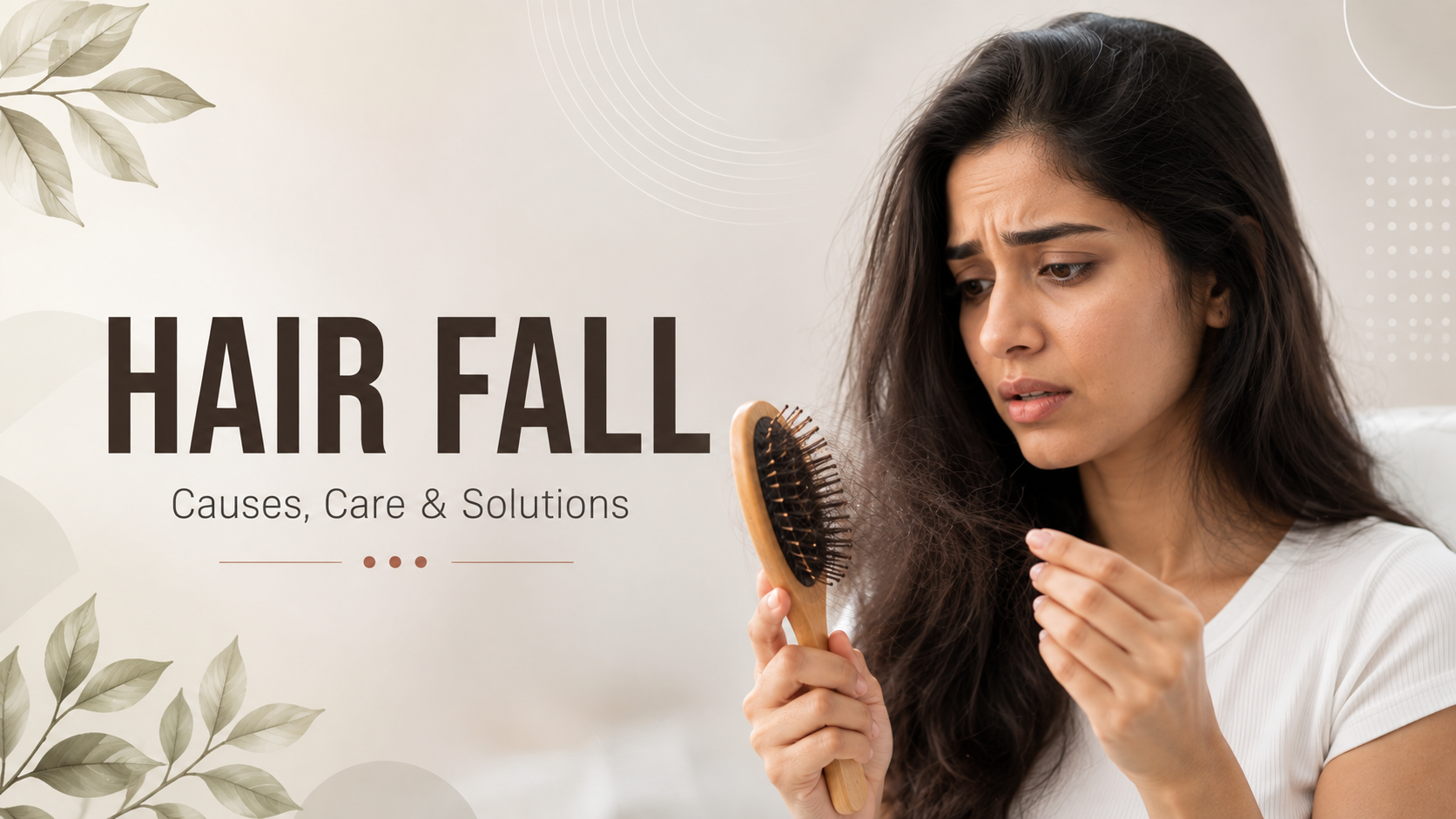
Seeing more hair than usual on your pillow, in the shower drain, or on your hairbrush is unsettling, especially when it starts happening in your twenties or thirties, well before you expected to think about hair loss at all. The good news is that hair fall at this age is extremely common, and in most cases, genuinely treatable once the actual cause is identified. The confusing part is that the internet is full of conflicting advice, and not all of it is accurate.
Losing somewhere between 50 and 100 strands a day is considered a normal part of the hair growth cycle. Hair fall becomes a concern when you notice significantly more than that, when you see visible thinning or widening at the parting, or when regrowth does not seem to be keeping pace with the hair you are losing.
Male and female pattern hair loss is largely hereditary, and it can start earlier than most people expect, sometimes in the early twenties. This type of hair loss tends to follow a predictable pattern, thinning at the crown and hairline in men, and diffuse thinning across the top of the scalp in women.
Significant physical or emotional stress can push a larger than usual number of hair follicles into a resting phase a few months later, leading to a noticeable increase in shedding. This type of hair fall, known as telogen effluvium, is usually temporary and improves once the underlying stress resolves.
Both an underactive and an overactive thyroid can contribute to hair thinning. This is one of the more overlooked causes, and it is often only identified through a simple blood test.
Low iron, vitamin D, and protein intake are all linked to increased hair shedding. Crash dieting or very restrictive eating patterns are a common, and often unrecognized, contributor to hair fall in younger adults.
In women, polycystic ovary syndrome and other hormonal imbalances can contribute to hair thinning, often alongside other symptoms like irregular periods or acne. This connection is frequently missed until a dermatologist specifically asks about it.
Consider someone in their late twenties who has been trying different shampoos and oils for over a year with no real improvement. A simple consultation and blood test reveals a vitamin D and iron deficiency, likely linked to a restrictive diet followed for weight loss. Once the deficiency is corrected and supported with an appropriate treatment plan, shedding noticeably reduces within a few months. This kind of straightforward, correctable cause is far more common than most people expect, but it is only found through proper evaluation, not guesswork.
Home remedies and over the counter products can help with mild, temporary shedding, but they are unlikely to resolve hair loss driven by genetics, hormonal imbalance, or an underlying medical condition. If you have been trying home remedies for more than a few months without improvement, that is usually a sign the underlying cause needs to be properly identified rather than guessed at.
Depending on the cause, a dermatologist may recommend topical treatments applied directly to the scalp, or oral medication to address hormonal or nutritional contributors. These are typically most effective when started early, before significant follicle loss has occurred.
Platelet Rich Plasma, or PRP, therapy uses a concentration of your own blood platelets, which are rich in growth factors, injected into the scalp to stimulate hair follicles. It is a well established option for early stage hair thinning, though results vary by individual and typically require multiple sessions spaced a few weeks apart.
You can read more about how PRP works for hair loss on our hair loss and baldness treatment page.
In many cases, the most effective treatment is not a hair specific product at all, but correcting the underlying issue, whether that is a thyroid imbalance, an iron deficiency, or a hormonal condition like PCOS. This is why a proper diagnosis matters more than trying product after product without understanding what is actually driving the hair fall.
The underlying causes overlap significantly, but the pattern often differs. Men typically see thinning at the crown and hairline, following a predictable pattern linked to genetics. Women more often experience diffuse thinning across the top of the scalp, and are more likely to have a hormonal or nutritional trigger such as PCOS, thyroid changes, or iron deficiency behind it.
Book a confidential consultation with the Dermatology team at Yutika Hospital for an accurate diagnosis and a customized treatment plan.
| Myth | Fact |
|---|---|
| Wearing a cap or helmet causes hair fall | There is no established link between wearing caps or helmets and hair loss. Poor hygiene or excessive friction can occasionally contribute, but the cap itself is not the cause. |
| Frequent hair washing causes hair fall | Washing does not cause hair loss. Hair that is already loose and ready to shed will come out during washing, which simply makes normal shedding more visible. |
| Cutting hair often makes it grow back thicker | Cutting hair has no effect on the thickness or rate of growth from the scalp, since hair growth happens at the follicle beneath the skin. |
| Hair oiling alone can reverse hair loss | Oiling can improve scalp health and hair texture, but it does not address underlying causes like genetics, hormones, or nutritional deficiencies. |
| Hair loss only affects older people | Hair fall is increasingly common in the twenties and thirties, driven by genetics, stress, and lifestyle factors. |
Hair fall has many possible causes, and effective treatment starts with correctly identifying which one applies to you. Yutika Hospital’s dermatology team takes a thorough approach to diagnosis, including relevant testing where needed, before recommending a treatment plan, whether that involves medication, PRP therapy, or addressing an underlying health condition.
Hair fall in your twenties or thirties can feel alarming, but it rarely means you are simply out of options. Most cases have an identifiable cause, whether genetic, hormonal, nutritional, or stress related, and understanding that cause is what actually determines which treatment will work for you, rather than continuing to try products by trial and error.
If your hair fall has continued for a few months without improvement, a consultation with our dermatology team can help identify what is actually going on.
This article is intended for educational and informational purposes only and should not be considered medical advice, diagnosis, or treatment. Every individual’s health condition is unique. Always consult a qualified healthcare professional for personalized medical guidance. Do not ignore or delay seeking professional medical advice based on information provided in this article. If you are experiencing a medical emergency, seek immediate medical attention or contact your local emergency services.

Yutika Hospital is a trusted multi-speciality hospital in Tirupati offering advanced general surgery and dermatology treatments. We focus on accurate diagnosis, effective treatment, and personalized patient care.
Need more help?
Email support
2-120A, Rd Number 2, M.K. Naidu Colony, Lingeswar Nagar, Bairagi patteda, Tirupati, Andhra Pradesh 517501
Best Hospital in Tirupati for General Surgery & Dermatology Treatments
© 2026 Yutika Hospital, Tirupati. All Rights Reserved.